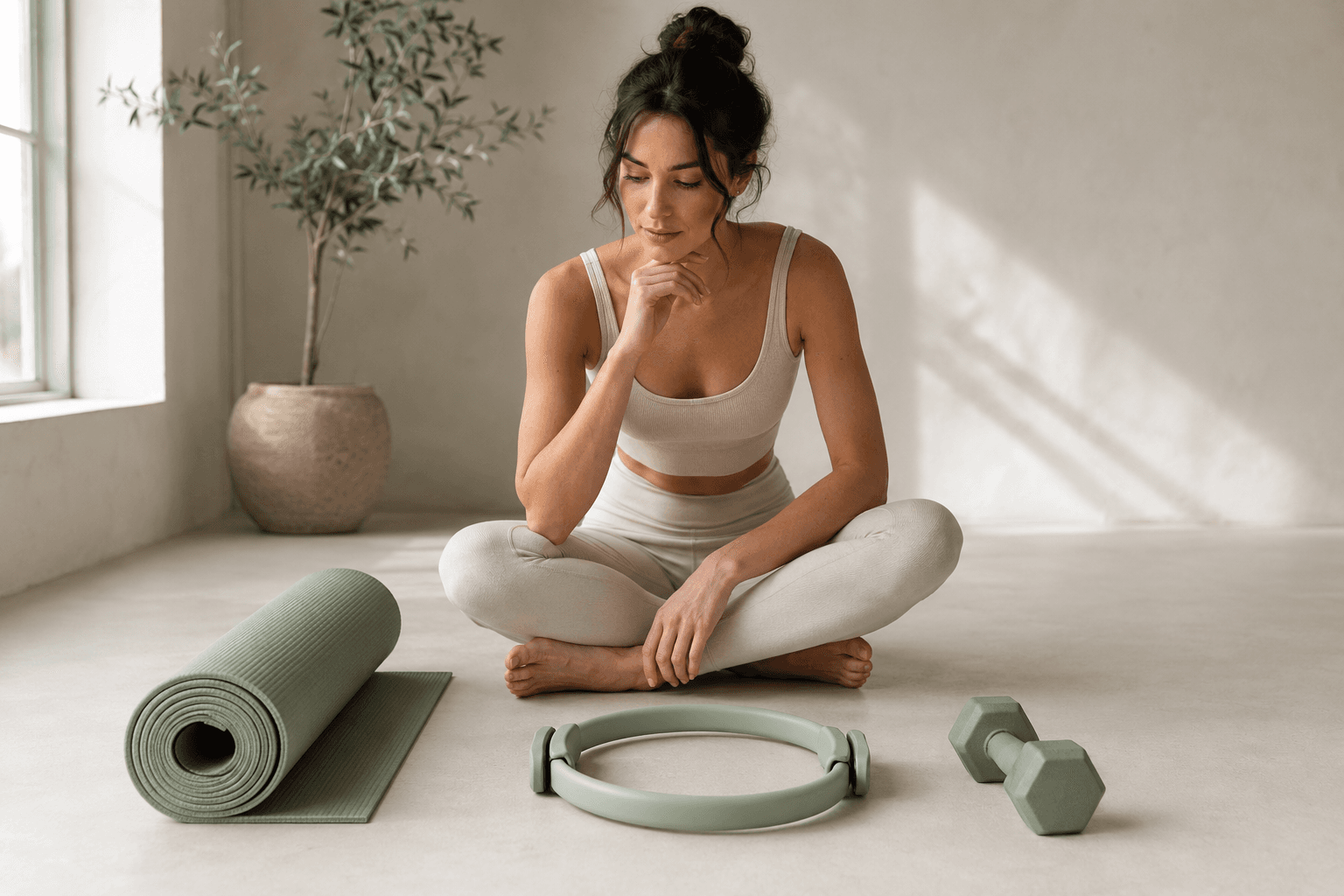
Yoga, pilates or fitness — which activity to choose for your goal?
Yoga, pilates, fitness — three disciplines filling studios and social media. But which one truly suits you? The answer depends less on trends than on your body, personality and deeper goals.
The honest comparison table
| Criterion | Yoga | Pilates | Fitness |
|---|---|---|---|
| Primary goal | Mind-body balance, flexibility | Deep core, posture | Strength, endurance, body composition |
| Joint impact | Very low | Low | Variable |
| Visible results | 8-12 weeks | 6-8 weeks | 4-8 weeks |
| Stress management | Very effective | Effective | Effective (moderate intensity) |
| Caloric expenditure | Low to moderate | Moderate | High |
| Suitable for beginners | Very well | Very well | With guidance |
| Suitable for chronic pain | Yes (supervised) | Yes (recommended) | With precautions |
Yoga — for whom, for what
Yoga is not one practice — it is a universe. From yin yoga (passive, floor-based, deep relaxation) to dynamic vinyasa (cardio-like, 500 calories/hour), ashtanga (demanding athletic practice) and hatha (ideal beginners).
For you if: you want to reduce stress and anxiety, improve flexibility, develop body awareness, practice something that nourishes the mind as well as the body.
The beauty effect: Regular yoga practice improves microcirculation (inverted poses send oxygenated blood to the face), reduces cortisol (which degrades collagen) and improves sleep quality. Cumulative effects visible on complexion within 8 weeks.
Pilates — the great misunderstood
Pilates was created by Joseph Pilates during WWI for injury rehabilitation. Its method: strengthening deep stabilising muscles (transverse abdominal, multifidus, pelvic floor) that are at the root of most chronic back, hip and shoulder pain.
For you if: you have chronic back pain, poor posture, want a flat stomach from deep work rather than crunches, are pregnant or postpartum, practise a sport and want to improve performance through better core stability.
The pilates body secret: Regular practitioners develop what is called the "pilates body" — elongated, toned, with naturally higher posture. Not genetics — 6 to 12 months of deep core work.
Fitness — the discipline of measurable results
Fitness covers strength training, cardio, HIIT and all combinations. The most scientifically documented discipline in terms of measurable results: fat loss, muscle gain, improvement of cardiometabolic markers.
For you if: you have specific body goals, love measurable progress, are motivated by performance, or want maximum caloric expenditure.
The winning combination
Science shows the broadest benefits come from combining: Pilates 2x/week (core and posture) + yoga 1x/week (mobility and stress) + brisk walking 30 min 3x/week (gentle cardio).
Frequently asked questions
Pilates is generally recommended first-line for chronic low back pain — it directly targets the deep stabilising muscles at the root of most pain. Yoga can complement with stretching but for an existing pathology, certified pilates instruction is preferable.
Yes — but indirectly. Yoga reduces chronic cortisol which promotes abdominal storage. It improves body awareness leading to better eating habits. Hot yoga burns more calories but remains less effective than fitness for rapid weight loss.
Yes — mat pilates is ideal to start. One or two group classes to learn the basics, then home practice is possible. The reformer is more complex and requires supervision.
Yoga: minimum 3 times for measurable effects. Pilates: 2 to 3 times per week. Fitness: 3 times with adequate recovery. For all: 8 weeks minimum of consistency outweighs intensity.
No — all three are adaptable to all ages. Pilates is particularly recommended post-50 to maintain muscle density and posture. Yin yoga is ideal for ageing joints.
Yoga: improves microcirculation and reduces cortisol — more luminous complexion in 8 weeks. Pilates: improves posture and reduces facial tension. Fitness: improves circulation and cellular oxygenation.
Both have advantages. Studio: guidance and collective energy. Home: total flexibility, no travel, minimal cost. For beginners, 3-5 studio sessions to learn alignments before solo practice.
No — one of the most common myths. Brisk walking, moderate cycling and swimming give comparable results to HIIT for cardiovascular health, with less joint and nervous system stress.
Mat pilates uses bodyweight on the floor. The reformer is an apparatus with springs allowing variable resistance work — more precise, varied, challenging. To start: mat. To progress: reformer under supervision.
1h yoga (mind and mobility) + 2h pilates (body and posture). This duo covers all bases except intense cardio — compensated by daily 20-30 minute walks.