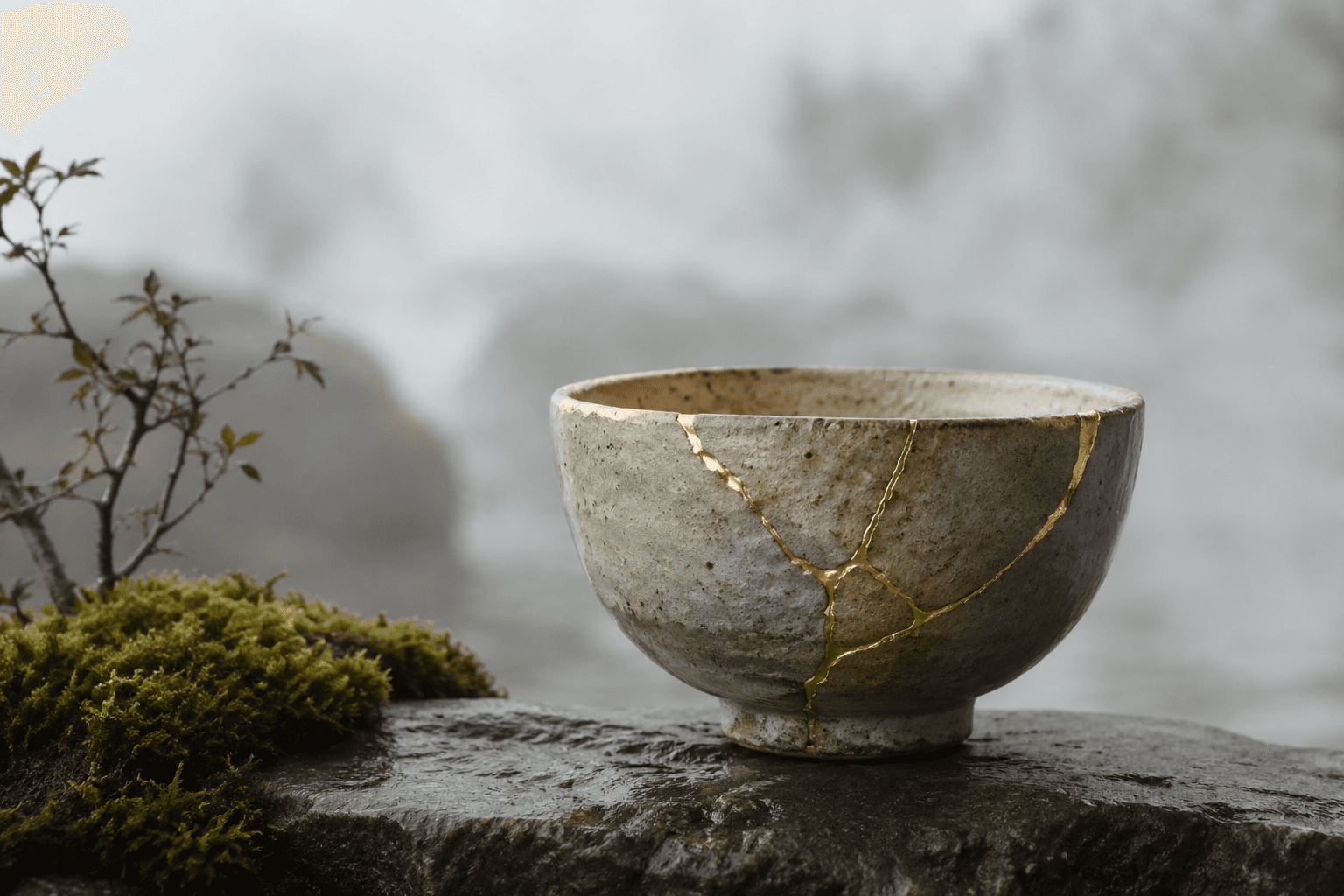
Japanese Traditions — Wabi-Sabi, Ikigai and Onsen: the philosophy of imperfect beauty
Japan has given the world some of its most profound wellness philosophies. From wabi-sabi's embrace of imperfection to ikigai's purpose-driven life, from the mineral onsen to forest bathing — these are not trends. They are centuries-old practices that modern science is only now beginning to fully understand.
Wabi-Sabi — The Beauty of Imperfection
Wabi-sabi (侘寂) is arguably Japan's most influential aesthetic philosophy. Born from Zen Buddhism and fully articulated during the Muromachi period (1336-1573), wabi-sabi finds beauty in imperfection, impermanence and incompleteness. The word "wabi" refers to the beauty of simple, rustic things — the moss on a stone, the crack in a ceramic bowl, the asymmetry of a handmade object. "Sabi" speaks to the beauty of ageing and transience — the patina on aged bronze, the fade of a textile.
What wabi-sabi means for beauty and self-perception:
In a beauty culture saturated with filters, retouching and the pursuit of symmetrical perfection, wabi-sabi offers a radical alternative: the wrinkle is not a flaw to be erased but a mark of a life lived. The pore is not an imperfection to be minimised but a testament to skin that breathes. This philosophy does not abandon care — it redirects intention from covering flaws to nourishing what is genuinely there.
The Japanese concept of kintsugi (金継ぎ) — the art of repairing broken ceramics with gold — is wabi-sabi made visible: the crack filled with gold becomes the most beautiful part of the piece. Applied to the body: the "imperfection" acknowledged and honoured becomes a site of beauty rather than shame.
Wabi-sabi and the minimal beauty routine: Japanese women are known for exceptionally curated, minimal skincare routines that prioritise quality over quantity. Typically: a gentle rice-based cleanser, a hydrating lotion (toner in Western terminology), one targeted serum and a light moisturiser. The philosophy is not "more steps" but "the right steps."
Ikigai — Why You Wake Up
Ikigai (生き甲斐) is often translated as "reason for being" — the intersection of what you love, what you are good at, what the world needs and what you can be paid for. But in daily Japanese life, ikigai is smaller and more intimate than this diagram suggests. It is the pleasure of morning tea. The satisfaction of a perfectly arranged bento. The joy of noticing light on a wooden floor.
The connection to beauty and wellbeing: Ikigai's relevance to beauty is not cosmetic — it is foundational. Research on Japanese centenarians (Japan has the highest concentration of people over 100 in the world) consistently identifies ikigai as a key factor in longevity and health. The neurological mechanism: having daily purpose reduces cortisol chronically, which directly impacts skin health, immune function and cellular ageing.
Women who practise a skincare ritual with intentionality — not as a chore but as a moment of ikigai — show measurably lower cortisol levels during the ritual than those who approach it mechanically.
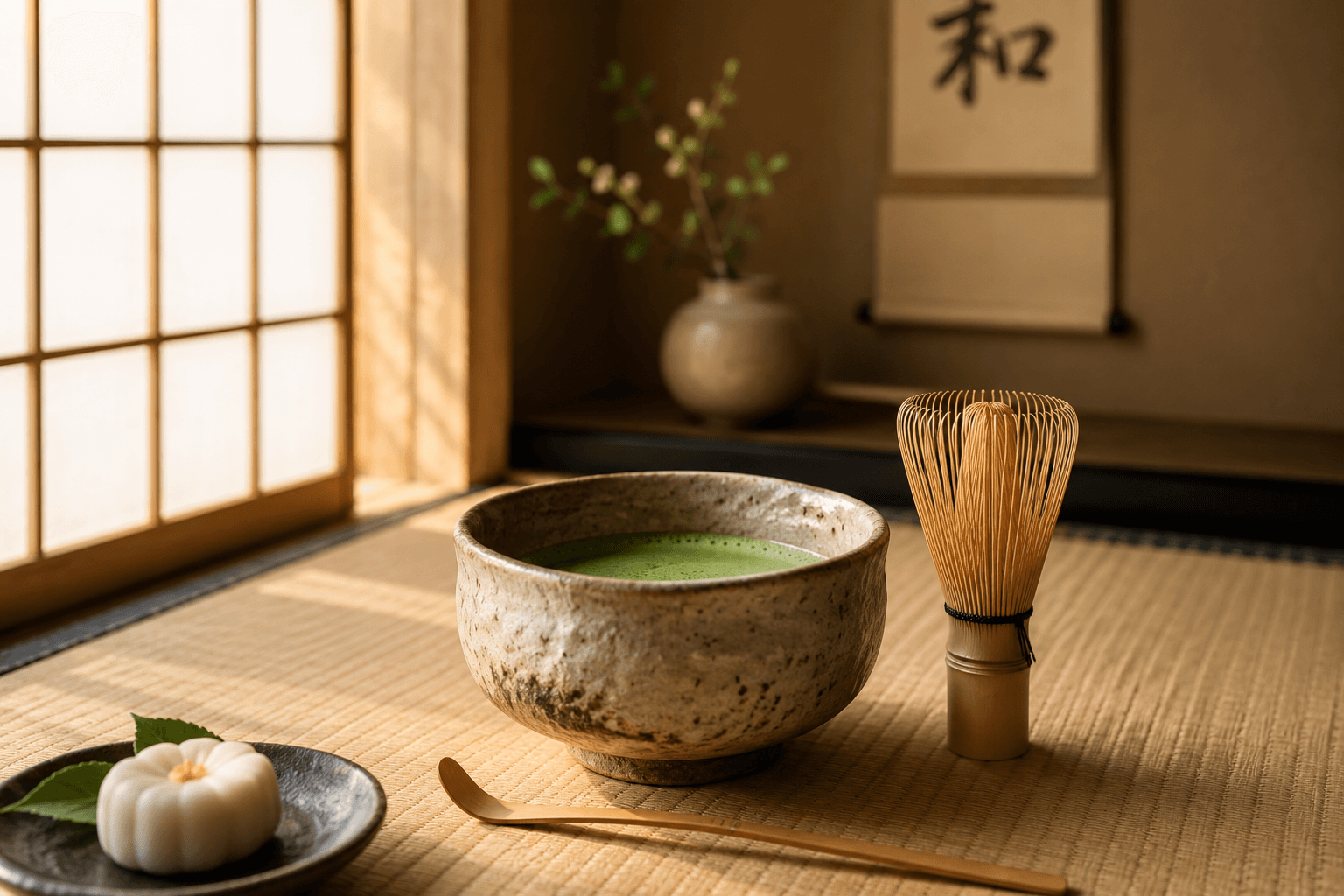
The Japanese tea ceremony — ikigai made tactile, each gesture a complete world
Onsen — The Science of Japan's Hot Spring Ritual
Japan has over 27,000 hot spring sources — more than any other country in the world. The onsen (温泉) culture is not recreational bathing. It is a 1,500-year-old therapeutic tradition with documented medical applications, codified in Japanese health law.
The five categories of therapeutic onsen water:
Sodium chloride — Improves circulation, reduces joint inflammation, promotes skin hydration. The most common onsen type.
Sulphate — Liver-supportive, improves skin texture and softness. Favoured for "beautifying" properties.
Hydrogen carbonate — Known as the "beautiful skin water" in Japan (bijin no yu, 美人の湯). Removes dead skin cells, improves clarity and luminosity.
Carbon dioxide — Rare and highly prized. Tiny CO2 bubbles penetrate the skin and stimulate microcirculation and collagen production. Used therapeutically for cardiovascular conditions.
Sulphur — The most medicinally potent. Antifungal, antibacterial, anti-inflammatory. Used for skin conditions including psoriasis and eczema.
The correct onsen ritual:
- Rinse and cleanse before entering — always. Onsen etiquette demands it.
- Enter slowly, allowing the body to acclimatise
- Maximum 10-15 minutes per immersion
- Exit, cool down with room temperature water (never cold shock immediately)
- Rest — the rest phase is not optional in Japanese onsen culture
- Apply a light moisturiser or oil while skin is still warm and receptive
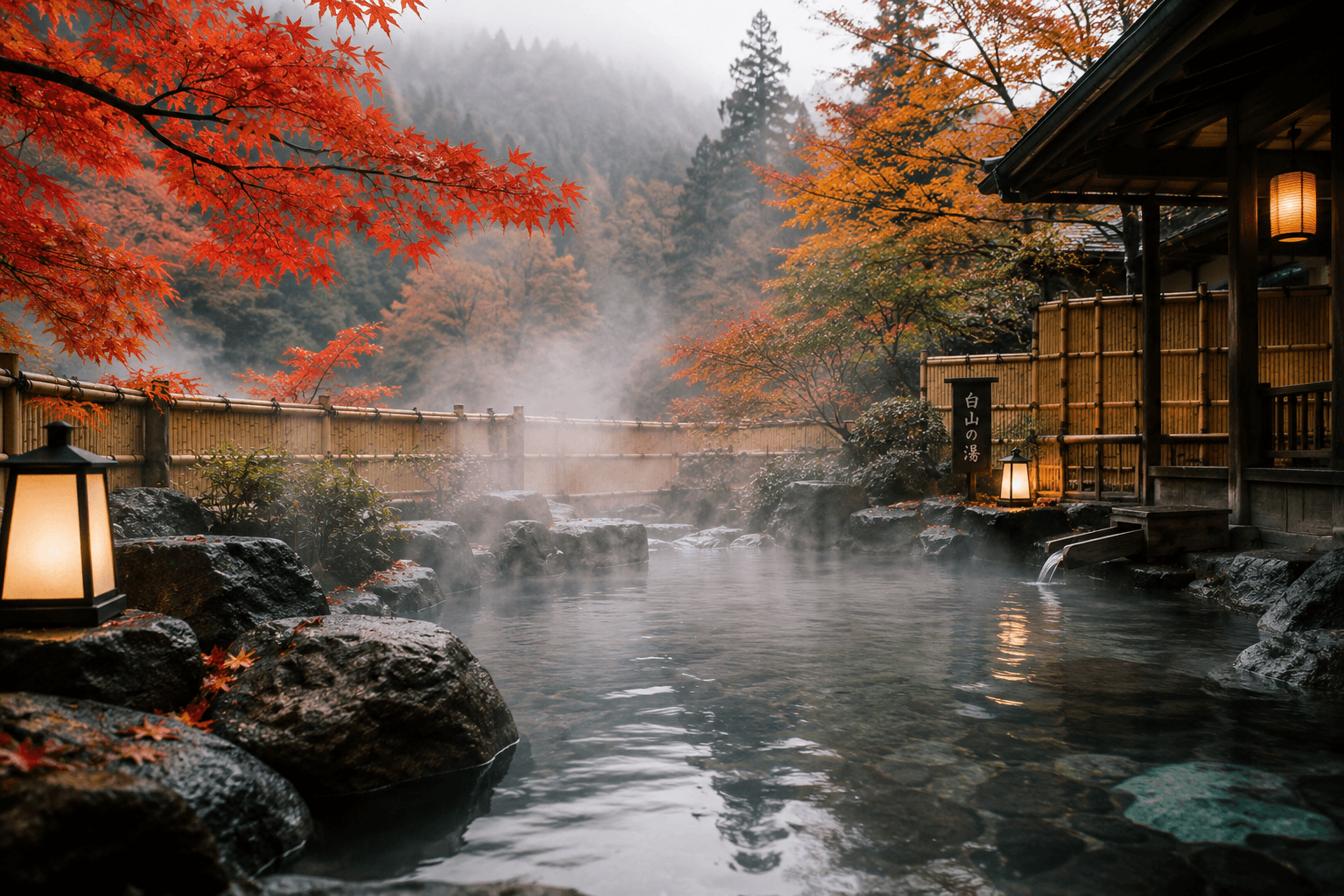
The Japanese onsen — 1,500 years of therapeutic tradition, validated by modern medicine
Shinrin-Yoku — Forest Bathing
Shinrin-yoku (森林浴) — literally "forest bath" — was formally recognised by the Japanese government as a preventive health practice in 1982. The practice is simple: immerse yourself in a forest environment, engaging all five senses without any goal or destination. No hiking, no exercise, no achievement.
The science is exceptional. Research from Nippon Medical School and Chiba University has documented:
- NK (natural killer) cell activity increases up to 50% after one day of forest bathing
- Effect persists for 30 days after a single weekend in forest
- Cortisol levels reduce measurably within 20 minutes
- Blood pressure and heart rate decrease significantly
- DHEA (the "youth hormone") levels increase
Phytoncides — volatile organic compounds released by trees, particularly cypress, cedar and pine — are the active mechanism. These molecules trigger measurable immune system responses when inhaled.
Frequently asked questions
Wabi-sabi is the Japanese aesthetic philosophy of finding beauty in imperfection, impermanence and incompleteness. Applied to beauty, it reframes "flaws" as marks of individuality and lived experience — redirecting skincare intention from concealment toward nourishment and genuine skin health.
Ikigai is the Japanese concept of daily purpose and meaning. Research on Japanese centenarians consistently identifies having ikigai as a key longevity factor. The neurological mechanism: daily purpose reduces chronic cortisol, which impacts cellular ageing, immune function and skin health directly.
Different onsen mineral compositions create different skin effects. Hydrogen carbonate onsen — known as *bijin no yu* (beautiful skin water) — removes dead cells and improves luminosity. Carbon dioxide onsen stimulates microcirculation and collagen. Sulphate onsen improves texture and softness. The mineral richness and warmth combination creates skin effects no commercial product can replicate.
10-15 minutes per immersion, with cooling and rest phases between. Multiple shorter immersions with rest are more effective and safer than one long session. The rest phase — often overlooked by non-Japanese visitors — is when the therapeutic effects consolidate.
No — and the distinction matters scientifically. Standard walking in nature provides cortisol reduction benefits. Shinrin-yoku is specifically about sensory immersion without goal or achievement: stopping to touch tree bark, listening to water, consciously breathing forest air. The phytoncide inhalation that produces immune effects requires slow, deep breathing — not the shallow breathing of exercise.
Kintsugi is the Japanese art of repairing broken ceramics with gold — making the crack the most beautiful part of the piece. As a philosophy applied to self-perception, it suggests that our "broken" or "imperfect" parts — when acknowledged and honoured rather than hidden — become our most distinctive features.
Japanese beauty routines prioritise skin preparation over product accumulation. A typical Japanese routine: gentle cleanser, hydrating lotion (applied in multiple layers), one targeted treatment, light moisture. The philosophy is precise quality over quantity — the opposite of accumulating products to address symptoms without treating their cause.
The *ofuro* (お風呂) is Japan's daily home bath ritual — a deep soaking bath in very warm water (41-43°C), typically taken in the evening. Unlike the onsen, which uses mineral spring water, the ofuro uses regular water. Its benefits come primarily from the thermal effect on body temperature — which induces deep sleep by triggering the body's natural cooling mechanism after exiting the bath.
Partially. Urban parks provide some phytoncide exposure if trees are present, and walking without destination in green space reduces cortisol measurably. However, the immune-boosting NK cell effects documented in research specifically require dense forest environments with significant tree volume. Urban parks are beneficial but not equivalent.
Rice — in various forms. Fermented rice water (sake ferment filtrate) is the most studied Japanese beauty ingredient, with documented benefits on skin elasticity, luminosity and cell renewal. Rice bran oil has exceptional vitamin E and squalene content. Oryza sativa (rice) extract appears in virtually every category of premium Japanese skincare.