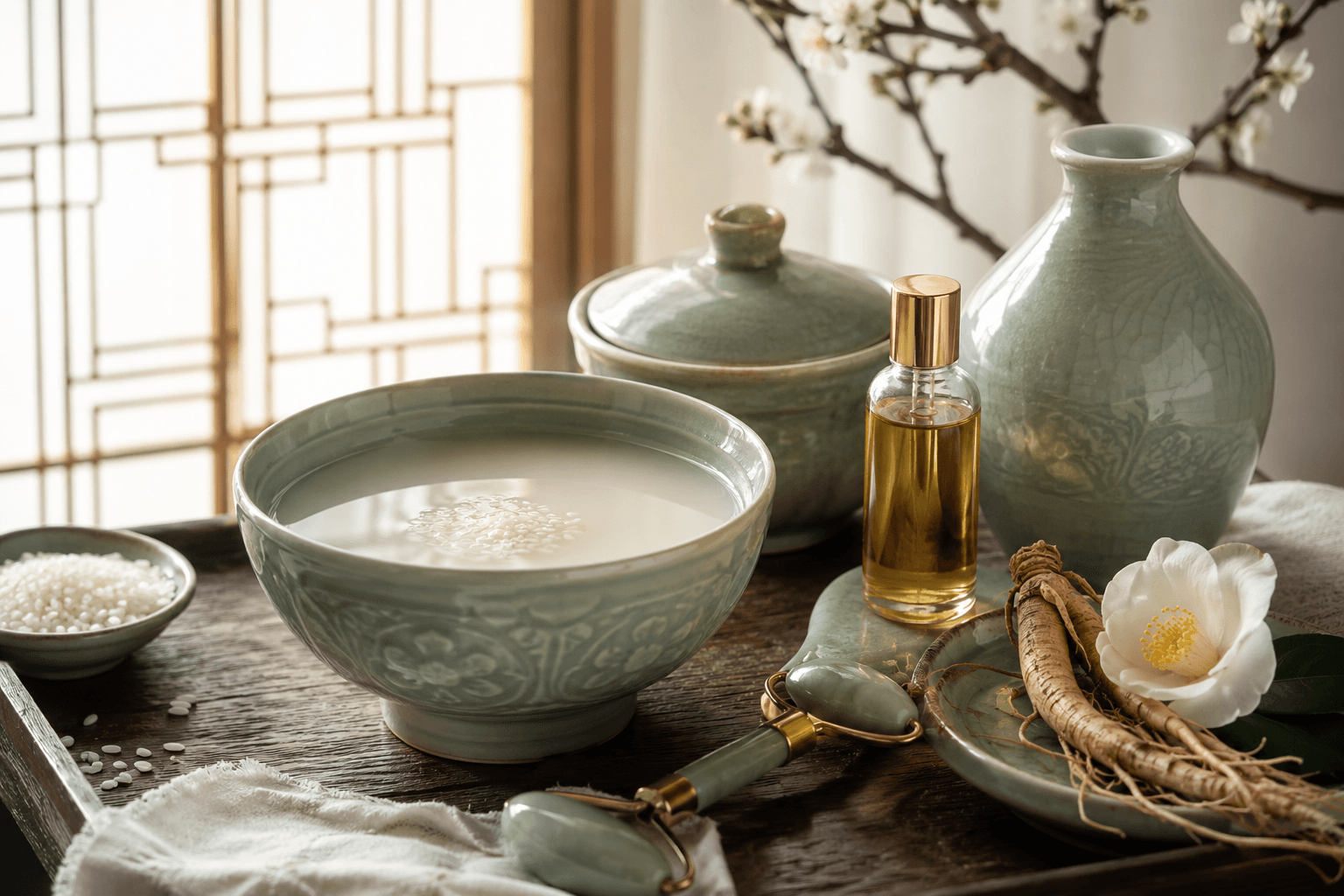
Korean Beauty Traditions — the ancestral rituals behind the glass skin phenomenon
Before K-Beauty became a global billion-dollar industry, it was simply how Korean women had cared for themselves for thousands of years. The glass skin ideal, the multi-step ritual, the reverence for fermented ingredients — none of this was invented by a marketing team. It was inherited.
The Joseon Dynasty — Where Modern K-Beauty Was Born
The Joseon Dynasty (1392-1897) is the cultural cradle of modern Korean beauty philosophy. Court ladies of Joseon — particularly the royal concubines and noblewomen known as yangban — developed elaborate multi-step beauty rituals that prioritised skin health over cosmetic coverage. Their philosophy was rooted in the Confucian concept of jeong (정) — a deep bond and care for others and oneself that extended to the body as a reflection of inner virtue.
The ideal Joseon complexion was described as biyoung — literally "translucent like jade." This is the direct ancestor of the glass skin ideal that captivates the world today.
The Ancient Ingredients — Unchanged for Centuries
Fermented Rice Water (쌀뜨물, Ssal-tteumul) The most ancient K-Beauty ingredient. Korean women have rinsed their faces with the water from washing rice for over 2,000 years. The fermentation process — which occurs naturally when rice water is left at room temperature for 24-48 hours — creates a liquid rich in inositol, ferulic acid, and vitamins B and E. Modern cosmetic science confirms what Joseon court ladies knew intuitively: fermented rice water improves skin elasticity, reduces pigmentation and accelerates cell renewal.
Camellia Oil (동백기름, Dongbaek-gireum) Extracted from the seeds of Camellia japonica, this oil was the primary facial treatment for Korean noblewomen. Extraordinarily rich in oleic acid (over 85%), it penetrates deeply without leaving residue and was applied after every cleansing ritual. Jeju Island — Korea's "Island of the Gods" — remains the primary source of premium Korean camellia oil, produced by women whose families have cultivated camellia trees for generations.
Ginseng (인삼, Insam) Korean red ginseng has been used in beauty rituals for over 2,000 years. The panax ginseng root stimulates microcirculation, activates collagen-producing fibroblasts and has documented anti-inflammatory properties. Korean queens reportedly applied ginseng-infused preparations to maintain the "jade complexion" ideal of the Joseon court.
Mung Bean Powder (녹두, Nokdu) Before modern exfoliants existed, Korean women used finely ground mung bean powder mixed with honey and water as a facial cleanser and gentle exfoliant. This preparation removes dead cells, tightens pores and brightens the complexion — functions that modern BHA and AHA products attempt to replicate.
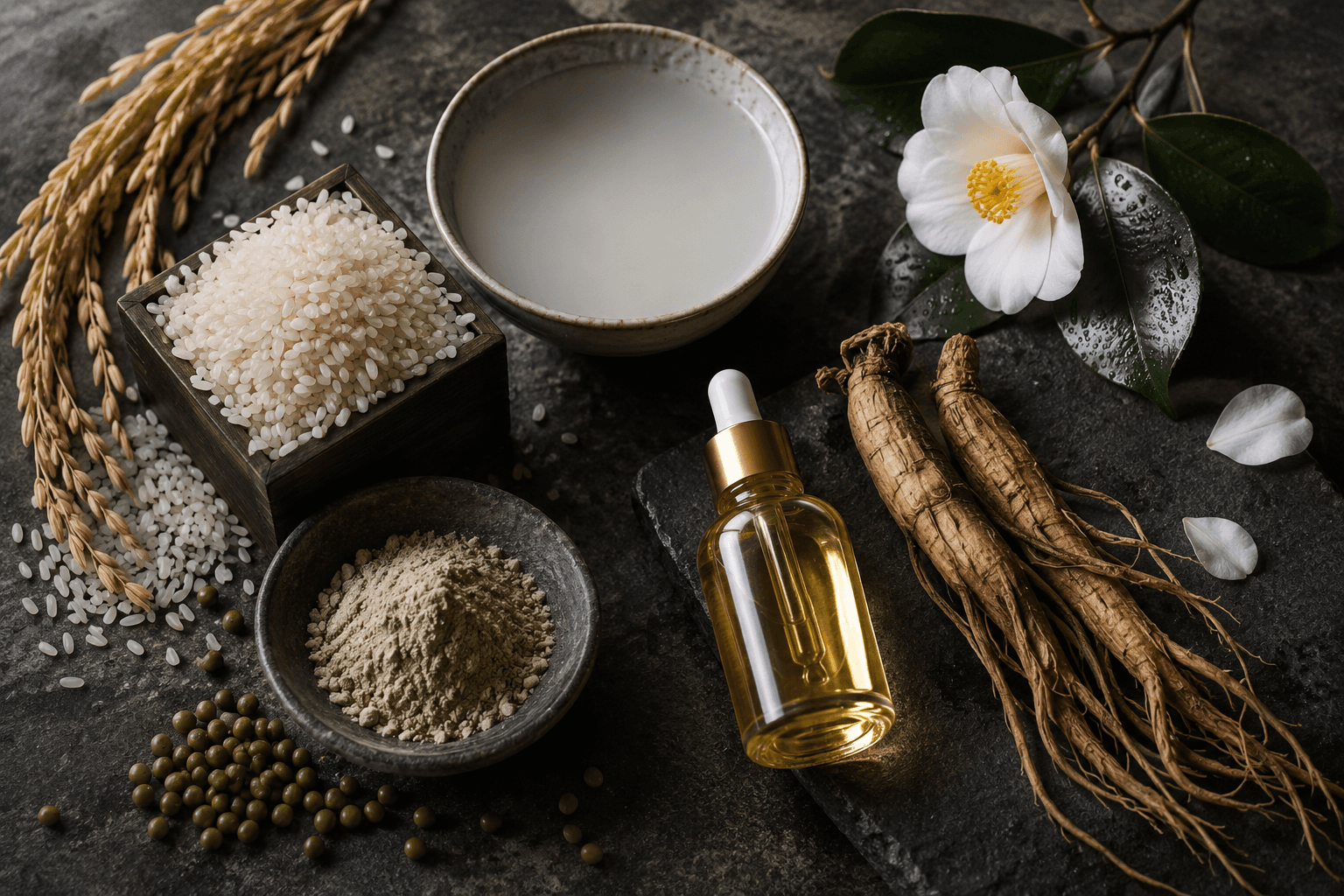
The ancestral Korean beauty pantry — fermented rice water, ginseng root and camellia oil have been used for over 2,000 years
The Jade Tradition — Beauty Tools Before Gua Sha
Long before the gua sha trend swept Western beauty culture, Korean women were using jade rollers and smooth jade stones in facial massage rituals dating back to the Silla Dynasty (57 BC – 935 AD). Jade held profound cultural significance in Korean culture — it was believed to carry the energy of balance (jeong-gi) and to transmit cooling, clarifying properties to the skin.
The traditional Korean jade massage technique was gentler than Chinese gua sha — more pressing and cooling than scraping, designed to reduce puffiness, stimulate lymphatic drainage and impart the "coolness" that jade was believed to bring.
The Hwangtu Tradition — Korea's Ancient Clay Ritual
Hwangtu (황토) — yellow clay from the Hwanghae region of Korea — has been used in facial masks and body treatments for over 3,000 years. Rich in silica, iron oxide and natural minerals, hwangtu clay absorbs excess sebum, purifies pores and is believed in traditional Korean medicine to balance the skin's gi (energy). Today, premium Korean skincare brands incorporate purified hwangtu into their clay masks — a direct lineage from ancient ritual.
Nunchi — The Korean Art of Reading the Room (and Your Skin)
Nunchi (눈치) is an untranslatable Korean concept describing the subtle ability to read situations and respond with perfect attunement. In Korean beauty culture, nunchi extends to the relationship with one's own skin — the ability to listen, observe and adjust. No fixed routine, no rigid products — instead, a continuous dialogue between the woman and her skin. More hydration when the skin calls for it. Lighter touch in summer. More nutrition in winter. This adaptive philosophy is why Korean skincare routines are described as "listening practices" by Korean dermatologists.
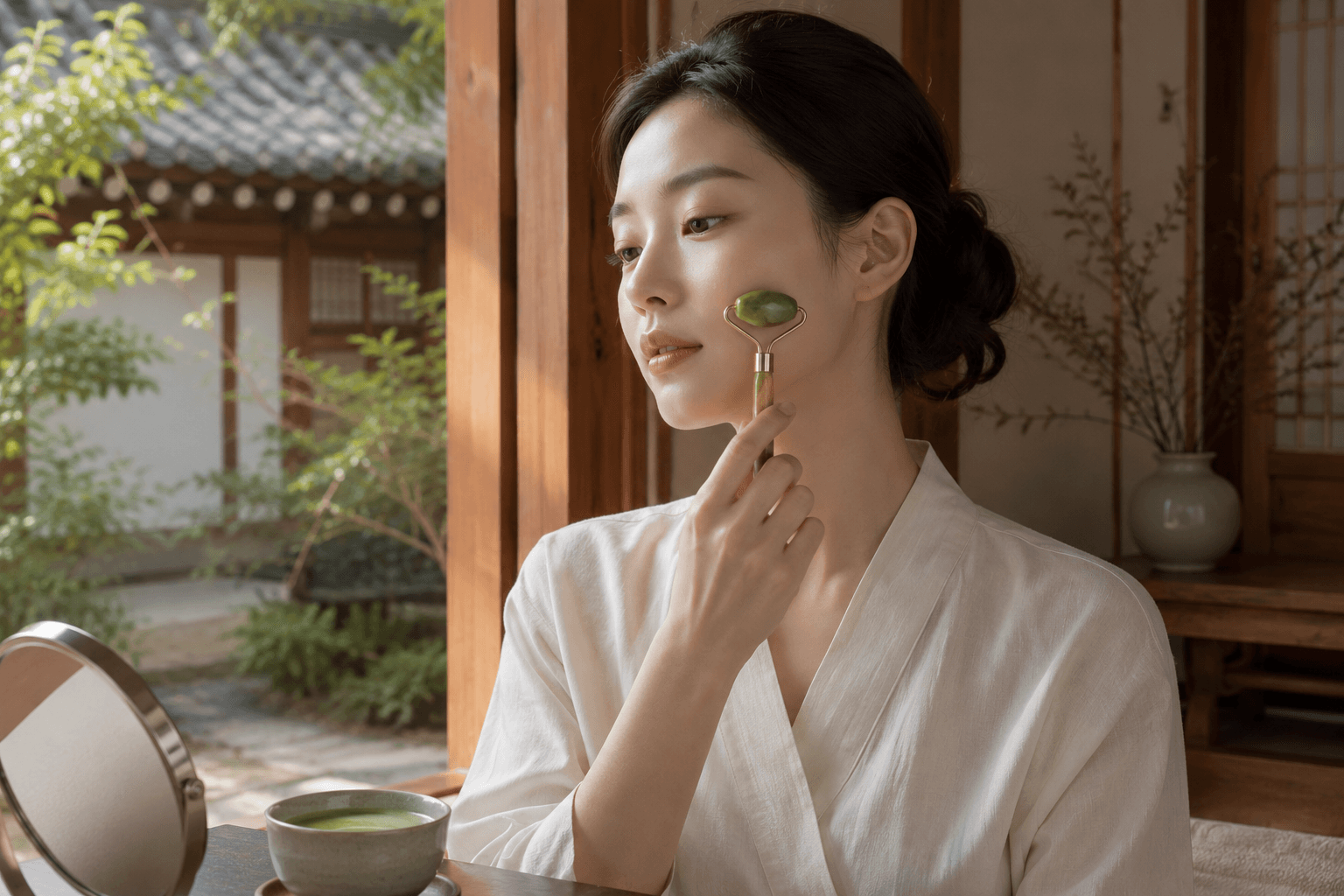
The Korean beauty ritual is a daily meditation — each gesture a conversation with the skin
The Forest — Korea's Original Wellness Space
Long before the Japanese popularised shinrin-yoku (forest bathing), Korean culture embedded forest and mountain time into the wellness calendar. The concept of sanshin (산신) — the mountain spirit — reflects a cultural reverence for natural environments as healing spaces. Korean women traditionally spent time in mountain forests after childbirth, during illness recovery and as seasonal wellness retreats. The practice of breathing forest air (sup-gyoung, 숲경), walking in mountain streams, and bathing in mountain mineral waters was documented in Joseon-era wellness texts.
Frequently asked questions
Fermented rice water rinsing (over 2,000 years old), camellia oil application, jade facial massage and hwangtu clay masks are the oldest traditions with direct continuity into modern K-Beauty. All four remain widely practised in Korea and have been scientifically validated.
The glass skin ideal originates from the Joseon Dynasty court concept of *biyoung* — translucent skin like jade — which was the beauty standard for noblewomen from the 14th century. It was achieved through layered hydration, fermented ingredients and jade tools, not through makeup coverage.
Fermentation is the cornerstone of Korean beauty philosophy. The fermentation process breaks down molecules into smaller, more bioavailable forms that penetrate deeper into the skin. It also creates beneficial acids, enzymes and probiotics that modern skincare science has confirmed improve skin barrier function, luminosity and cellular renewal.
Korean jade massage focuses on gentle pressing and cooling movements to reduce puffiness and stimulate lymphatic drainage. Chinese gua sha uses more scraping pressure to release fascial tension and stimulate blood flow. Both work on circulation but through different mechanisms and with different intensity.
Nunchi is the Korean art of reading situations with attunement. In skincare, it means listening to your skin's daily needs rather than rigidly following a fixed routine. Korean beauty philosophy encourages adjusting products, textures and quantities based on what the skin is expressing each day — the antithesis of one-size-fits-all Western routines.
Yes — scientifically documented. Korean red ginseng (panax ginseng) contains ginsenosides that stimulate collagen synthesis, improve microcirculation, reduce inflammation and have antioxidant properties. Multiple PubMed studies confirm its effectiveness in reducing signs of ageing and improving skin luminosity.
Joseon court women — particularly royal concubines and *yangban* noblewomen — were the primary innovators of Korean beauty philosophy. With access to rare ingredients, time for multi-step rituals and cultural pressure to maintain the jade complexion ideal, they developed and refined practices over five centuries that form the foundation of modern K-Beauty.
Both emphasise skin health over coverage. Korean beauty focuses on layered hydration, fermented ingredients and achieving luminosity. Japanese beauty (*Bijin*, 美人) emphasises texture refinement, oil control and a more matte, even complexion. Korean philosophy tends toward dewy radiance; Japanese philosophy toward porcelain perfection.
Yes — with adjustments. Fermented rice water suits all types and is particularly beneficial for sensitive and pigmented skin. Camellia oil is best for dry to normal skin. Ginseng works for all types but is particularly effective for mature and dull skin. Hwangtu clay is best for oily and combination skin.
Galactomyces ferment filtrate (found in SKII Pitera) traces directly to fermented rice water. Camellia oil serums are direct continuations of the Joseon oil ritual. Red ginseng extracts appear in virtually every premium Korean anti-ageing range. Hwangtu clay appears in modern Korean clay masks.