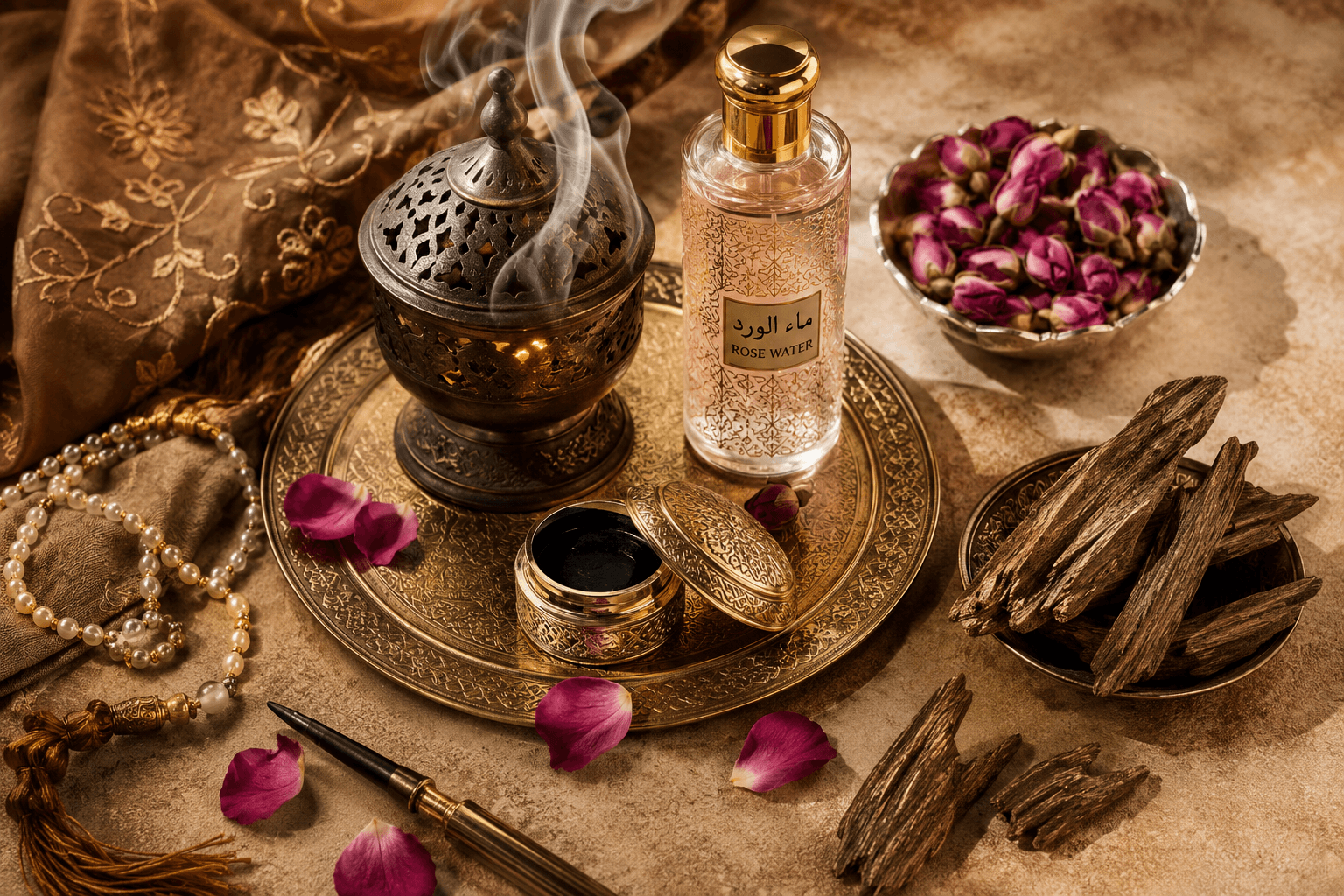
Arab Beauty Traditions — five thousand years of elegance and care
Before any global cosmetic brand existed, before any luxury packaging was invented, Arab women mastered the art of body care with instruments that dazzled other civilisations. From Egyptian kohl to Damascus rose water, from Moroccan henna to Gulf oud — this heritage is still alive.
Kohl — The Oldest Cosmetic in History
Kohl use dates back over 5,000 years in Pharaonic Egypt. It was simultaneously medical protection against the burning sun, documented antimicrobial agent and symbol of spiritual protection.
Damascus Rose Water — The Miracle of the Still
The Damascena rose cultivated in the Baqlouta plain of Damascus is the world's finest variety for distillation. Steam distillation — an Arab technique dating to Avicenna in the 11th century — produces a floral water containing over 300 active organic compounds.
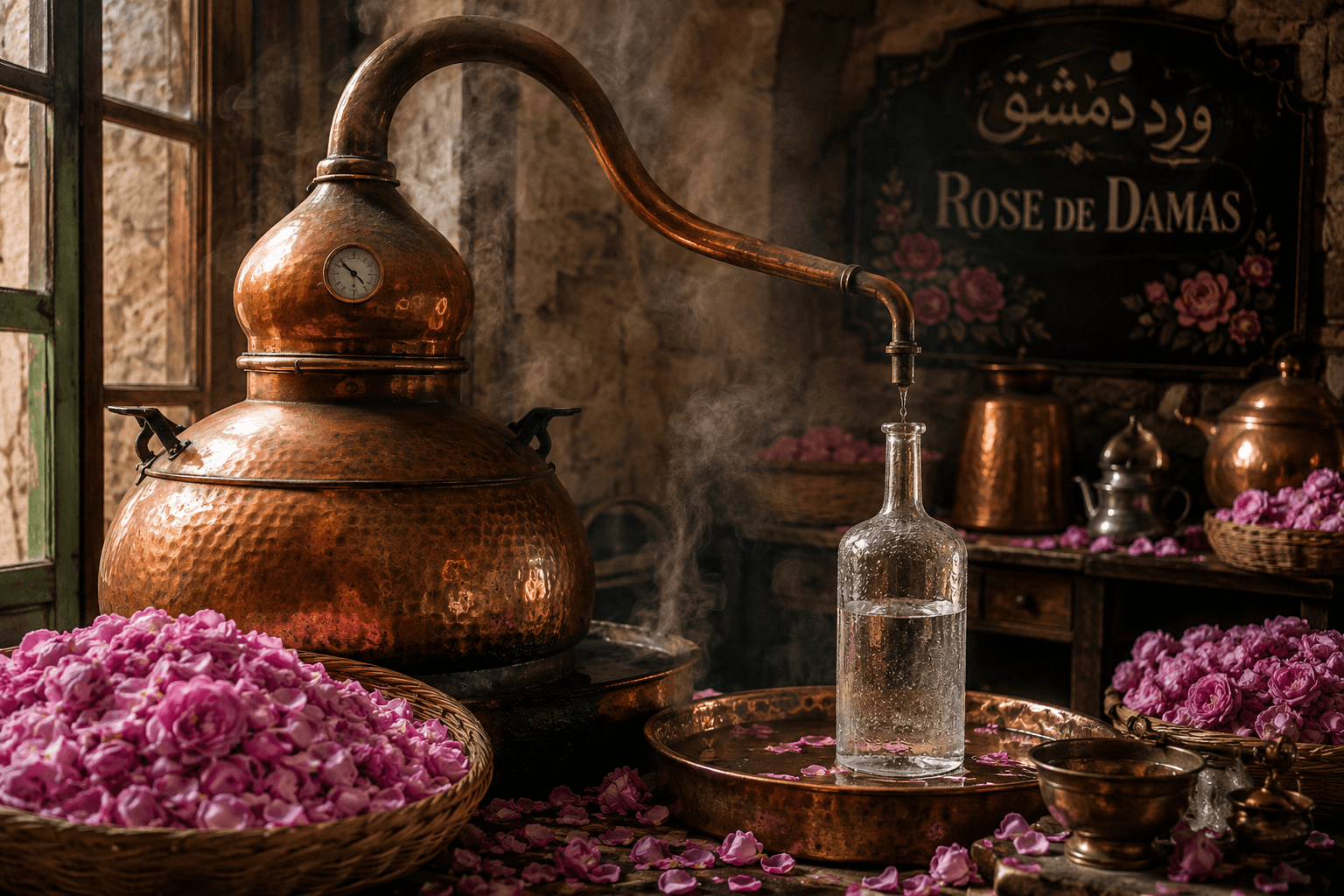
Distilling Damascus rose water — an Arab technique invented by Avicenna in the 11th century
Oud — The Olfactory Memory of Arab Civilisation
Gulf countries consume approximately 80% of the world's oud production. Oud grades vary by origin, degree of fungal infection and distillation method.
Henna — The Art of Drawing on Skin
Each Arab region has its own geometric style reflecting its cultural identity. The henna night in Arab weddings is the most intimate celebration — reserved for women.
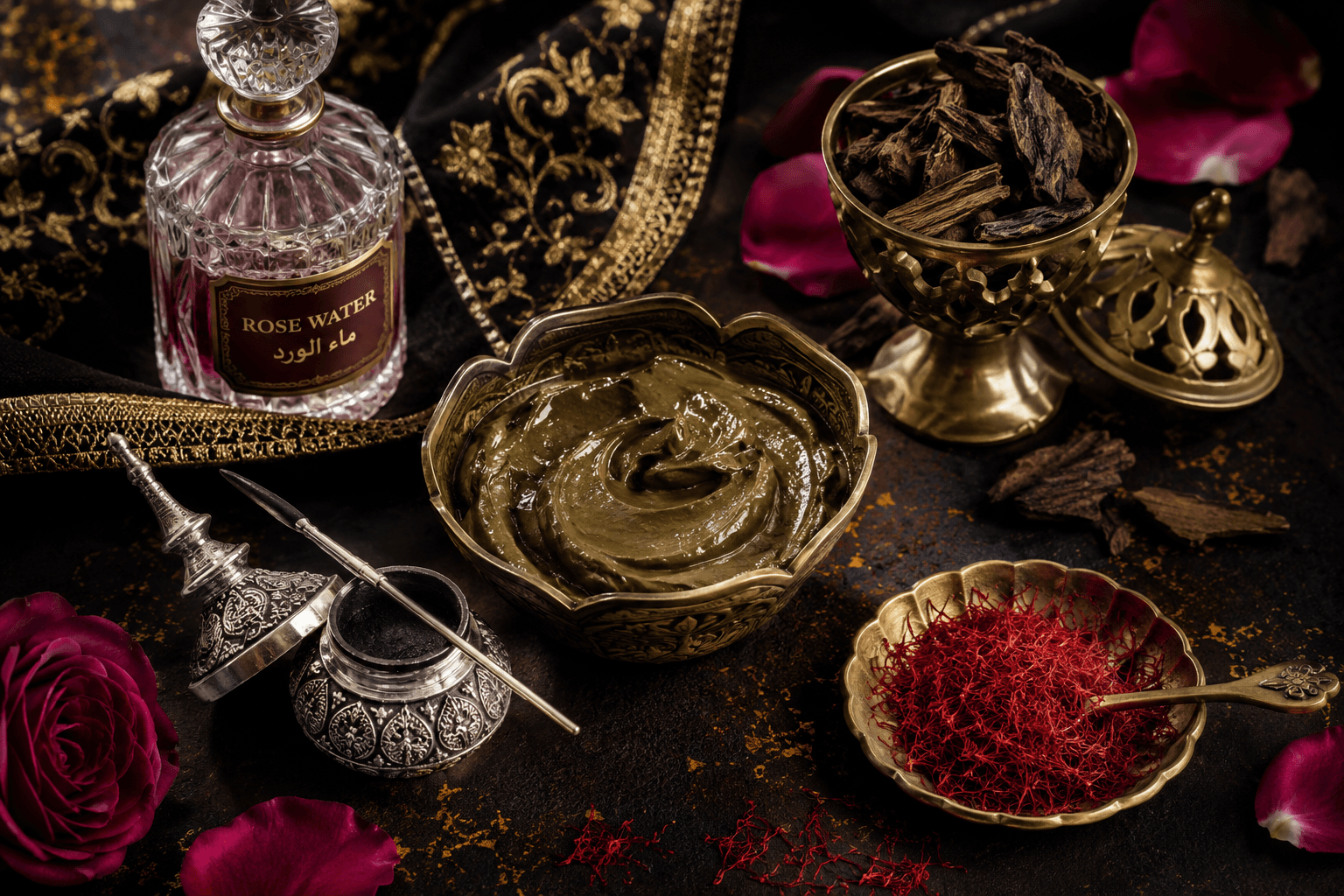
The five treasures of Arab beauty — a heritage spanning five thousand years
Frequently asked questions
Kohl — its use dates back over 5,000 years in Pharaonic Egypt. Beauty tool, medical protection and spiritual symbol simultaneously.
The Damascena rose contains the highest concentration of active aromatic compounds. Traditional steam distillation preserves the complete chemical spectrum.
Pure natural henna is safe for most types. Avoid black henna containing PPD — it can cause severe allergic reactions.
As toner after cleansing on still-damp skin. As a spray throughout the day. Added to honey or ghassoul masks.
Cambodian oud (Khmer) is considered the world's finest. Followed by Indian, Indonesian, then Emirati and Omani with different properties.
Mix ghassoul powder with warm water or rose water to a creamy paste. Apply to hair and body for 5-10 minutes. Once or twice weekly.
Natural kohl of authentic ithmid or ground charcoal from reliable sources is safe. Avoid cheap commercial products containing harmful synthetic materials.
Steam to open pores, savon beldi, kessa, ghassoul, rose water as final step. The order is essential for the result.
The natural fungal infection touches a very small proportion of Aquilaria trees, and trees require decades to mature. Gulf demand far exceeds available supply.
Morocco: fine linear geometric patterns. Yemen: traditional ornaments covering palms and soles. Gulf: contemporary patterns mixing traditional and modern.