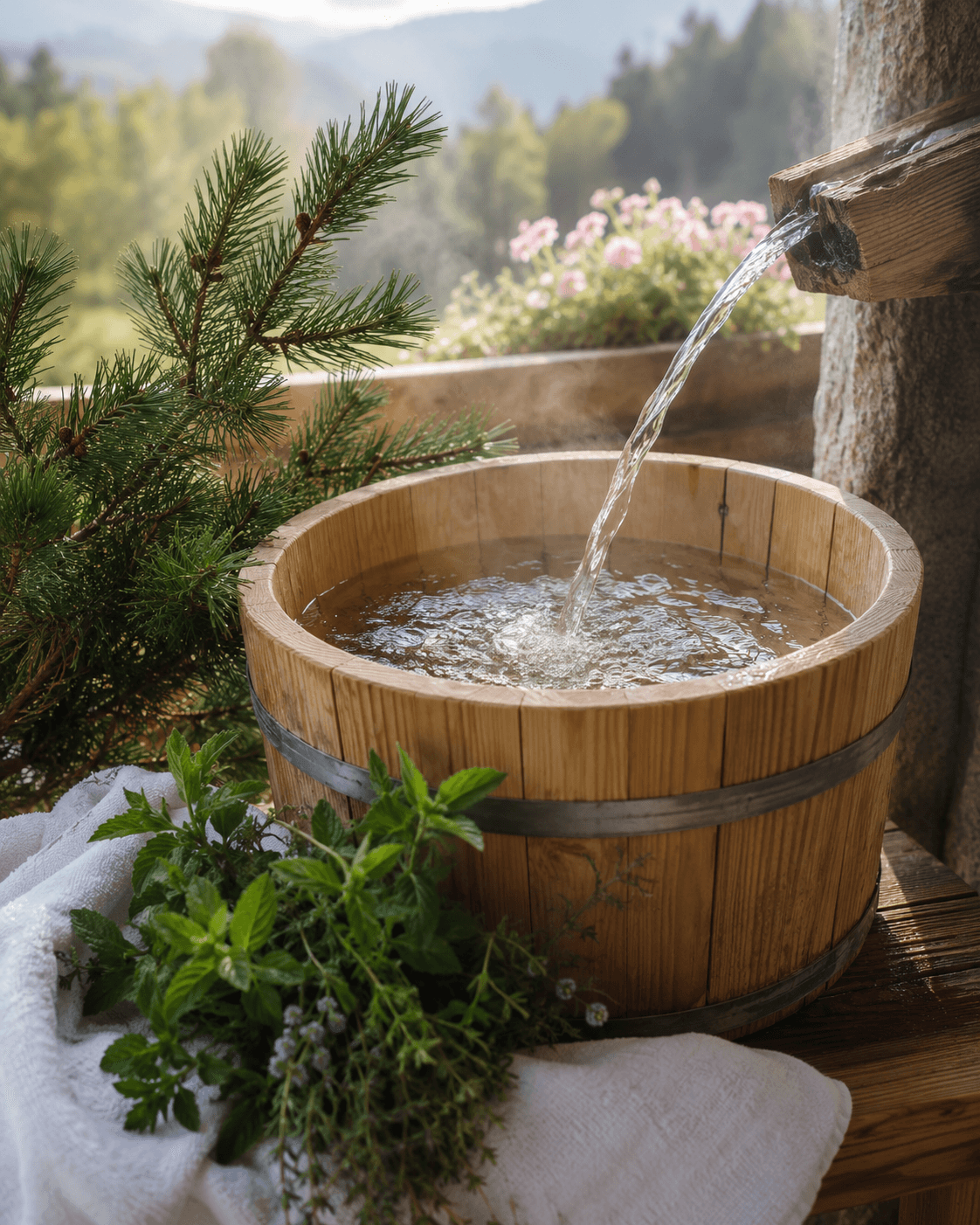
Kneipp Therapy — the German water tradition for skin and wellbeing
A Bavarian priest, a river and a method still practised in German spa towns today. Kneipp therapy rests on one simple principle: the deliberate alternation of cold and warmth trains the vessels, the skin and the nervous system.
Sebastian Kneipp and the 19th-century origins
Sebastian Kneipp (1821–1897) was a Bavarian priest who, as a young seminary student, contracted severe tuberculosis. According to tradition, his condition improved after repeated brief cold baths in the Danube — an experience that shaped the rest of his life. In Bad Wörishofen, he developed this into a systematic water treatment, published in 1886 as "My Water Cure." The book was translated into more than 20 languages and turned Bad Wörishofen into one of Europe's first spa towns specialising in hydrotherapy.
Unlike many wellness trends, the Kneipp method does not rest on a single active ingredient but on a holistic life philosophy — still classified today in Germany as a recognised naturopathic treatment and practised in dedicated certified Kneipp spa towns.
Water is a simple yet powerful remedy — one only needs to know how to use it.
— Sebastian Kneipp, My Water Cure, 1886The 5 pillars of the Kneipp method
Water
Contrast showers, affusions, water treading and dew walking train the constriction and dilation of blood vessels — the core of the method.
Medicinal plants
Herbal applications as teas, wraps, oils and baths complement the water treatments and support the skin from within and without.
Movement
Regular, moderate outdoor exercise — not high-performance sport, but consistent, gentle activity.
Nutrition
A simple, plant-forward diet without excess sits at the centre of Kneipp's teaching — well ahead of the modern whole-food concept.
Balanced living
A balanced life rhythm, sufficient sleep and inner calm are considered just as important as the physical treatments.
Proven effects on circulation and skin
The abrupt switch from warm to cold water triggers a rapid constriction of skin blood vessels, followed by dilation once the skin warms again. This vascular training — studied in modern sports medicine as contrast water therapy — is linked to improved subjective recovery after physical exertion and better-trained thermoregulation.
For facial skin, this translates concretely: brief cold stimuli at the end of a cleansing routine can reduce the visible appearance of enlarged pores, stimulate microcirculation and produce an immediately fresher complexion — though they should be dosed carefully on sensitive or rosacea-prone skin.
How to practise Kneipp at home
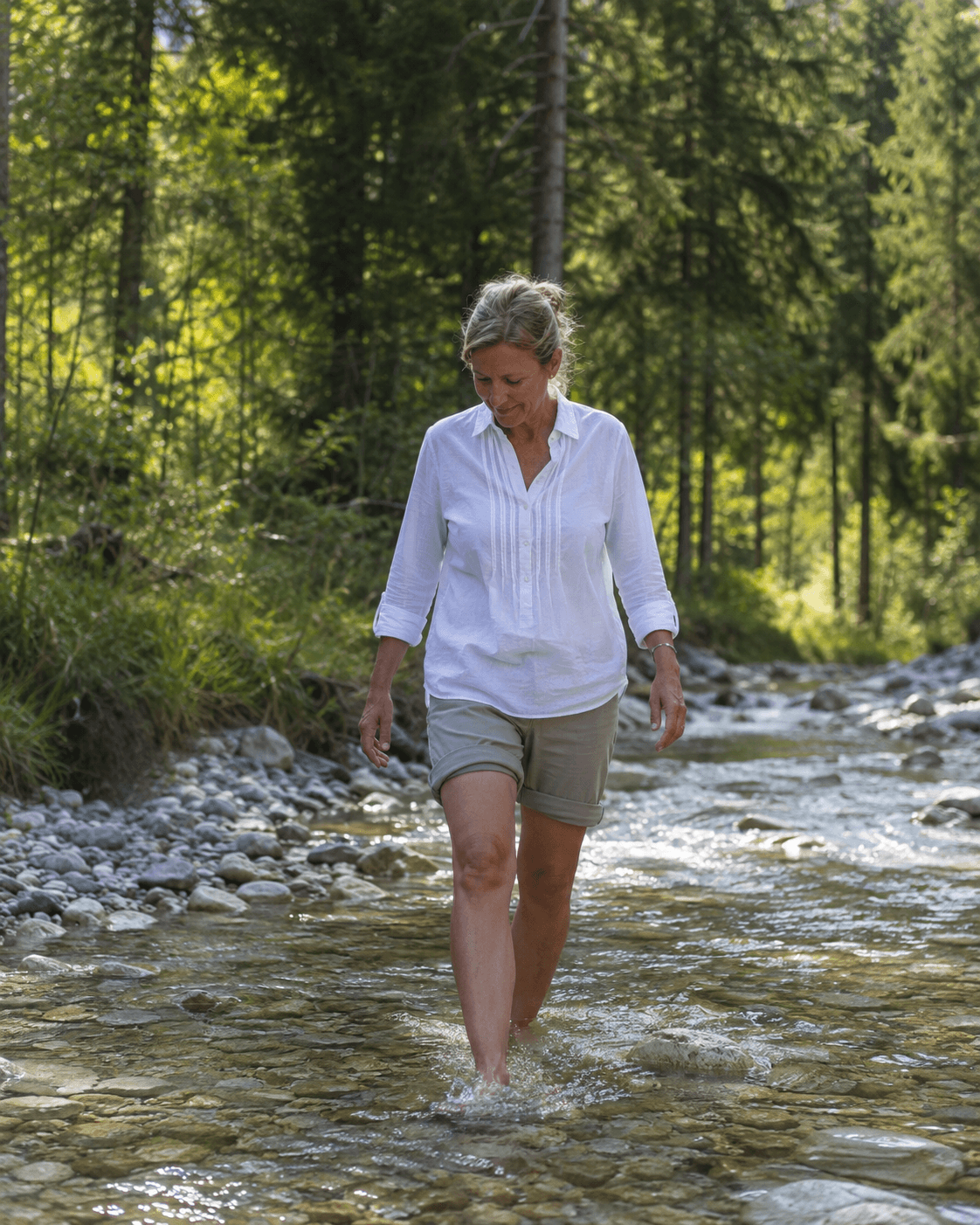
Water treading in a cold stream is one of the most accessible Kneipp applications
Contrast foot bath
3 minutes of warm water (around 36°C), then 10-15 seconds of cold water. Two to three repetitions, always finishing on cold.
Kneipp walking (water treading)
A slow stork-like walk through knee-high cold water — a stream, lake or dedicated water-treading basin. Trains the veins and stimulates circulation.
Dew walking and barefoot walking
Walking barefoot through dew-wet grass in the early morning — a gentler variant of water treading, ideal for beginners.
Affusions
A thin, pressure-free stream of water traced along the arm or knee, from the outside in, cold following warm. Classically applied at the end of a shower.
The essential German medicinal plants
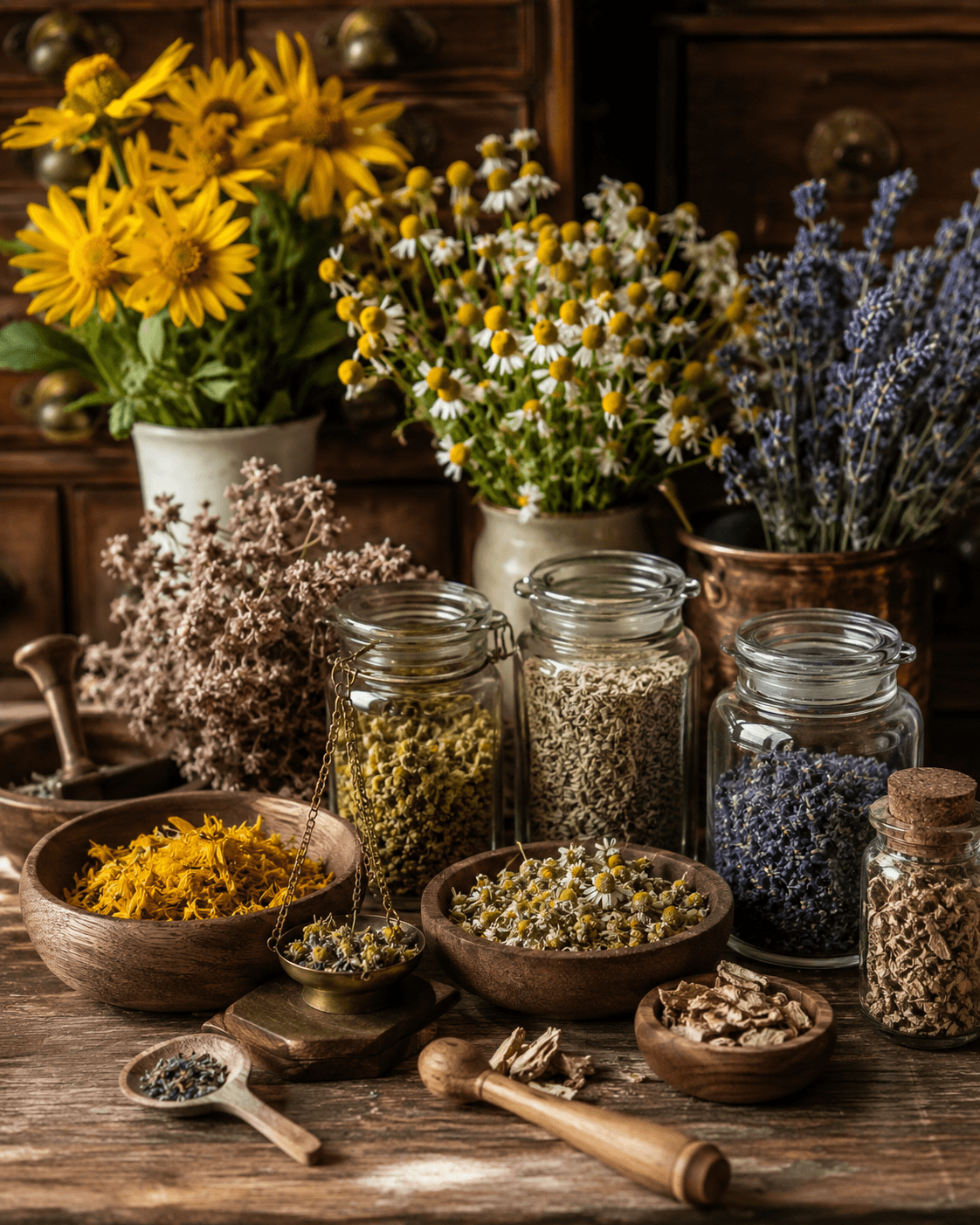
Arnica, chamomile, valerian and St. John's wort — the four pillars of German phytotherapy
| Plant | Primary action | Application |
|---|---|---|
| Arnica | Anti-inflammatory, reduces swelling | Topically for bruises and muscle soreness, as gel or tincture |
| Chamomile | Calming, skin-regenerating | Steam baths, compresses, creams for irritated skin |
| Valerian | Calms the nervous system, promotes sleep | As a tea or bath additive in the evening |
| St. John's wort | Mood-lifting, supports wound healing | Oil applied topically to scars, tea for inner restlessness |
Why naturopathy offers more than classic cosmetics
In Germany, naturopathy (Heilpraktiker practice) is a legally recognised profession with its own training and licensing — not a niche trend. The fundamental difference from classic cosmetics lies in the approach: cosmetics usually treat the skin's surface in isolation, while Kneipp-style naturopathy treats skin, circulation, nervous system and lifestyle as one connected system. Reddened, sensitive skin is not addressed with a soothing cream alone, but also through sleep quality, stress levels and circulation.
Frequently asked questions
Sebastian Kneipp (1821–1897) was a Bavarian priest who developed his own water therapy after reportedly recovering from severe tuberculosis through repeated cold baths in the Danube. His 1886 book "My Water Cure" spread the method across Europe.
Water, medicinal plants, movement, nutrition and balanced living. Kneipp viewed health as the interplay of these five elements, not the result of any single treatment.
Alternating warm and cold water stimulates the constriction and dilation of blood vessels, training peripheral circulation. Contrast water therapy studies confirm positive effects on subjective recovery after physical exertion.
3 minutes of warm water (about 36°C), then 10-15 seconds of cold water, repeated two to three times. Always finish with cold water to stimulate circulation.
A slow, stork-like walk through knee-high cold water, typically in a dedicated water-treading basin or natural stream. Trains the veins and is traditionally used to improve circulation.
Arnica for bruises and muscle soreness, chamomile for skin calming, valerian for sleep support and St. John's wort for mood and wound healing. All four are among the most widely used plants in German phytotherapy.
Kneipp therapy is classified in Germany as a recognised naturopathic treatment and is practised in dedicated certified spa towns. Individual elements such as cold applications are also documented in modern sports and rehabilitation medicine.
Yes. Cold stimuli improve microcirculation and can reduce the visible appearance of enlarged pores. Warm applications open the pores for deeper cleansing. The combination of both is described as particularly effective.
Classic cosmetics usually treat the skin's surface in isolation. Kneipp-style naturopathy treats skin, circulation, nervous system and lifestyle as one connected system and treats accordingly, holistically.
Yes. Contrast foot baths, dew walking in your own garden and simple affusions with a handheld shower head can easily be done at home. A dedicated spa town additionally offers professional guidance and complementary treatments.