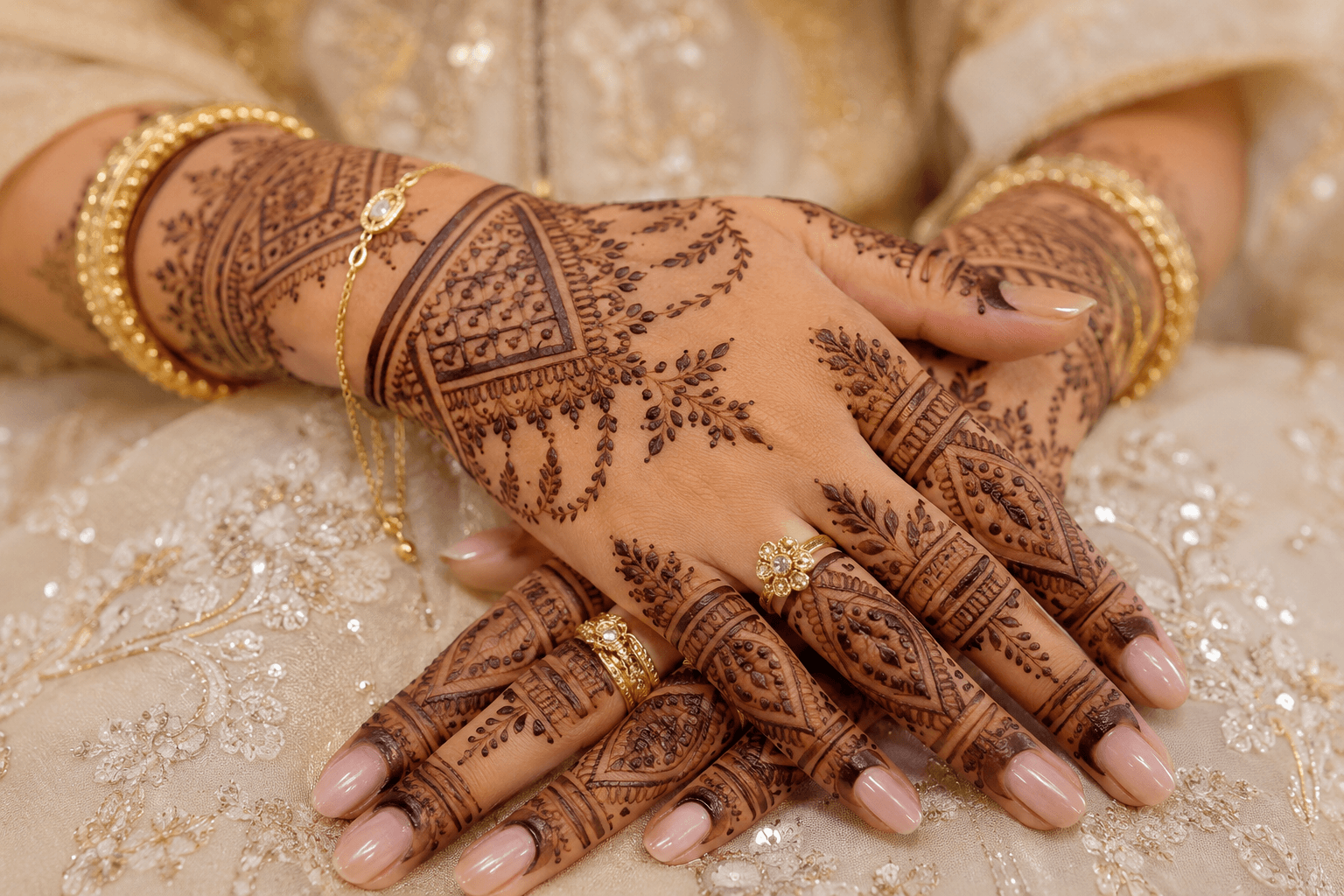
Emirati Bridal Henna — The Ancient Wedding Art from Henna Night to Morning
Henna in the Emirates is not merely decoration painted on skin. It is a language — the language of joy, blessing and transition from one life chapter to another. Every motif carries meaning, and every henna night carries a memory that time cannot erase even after the dye fades.
The History of Henna in the Gulf — Roots Deeper Than Written History
Henna (Lawsonia inermis) has been cultivated in the Arab region for over 9,000 years. In Pharaonic Egypt it coloured the nails and hair of royalty. On the Arabian Peninsula it was a beauty and spiritual tradition before and after Islam.
What distinguishes Emirati henna is not only the patterns — it is the accumulated meaning across generations. In the UAE, words are spoken while henna is drawn. Quran is recited over it. Rose water is sprinkled on it. It is a ritual, not mere artistry.
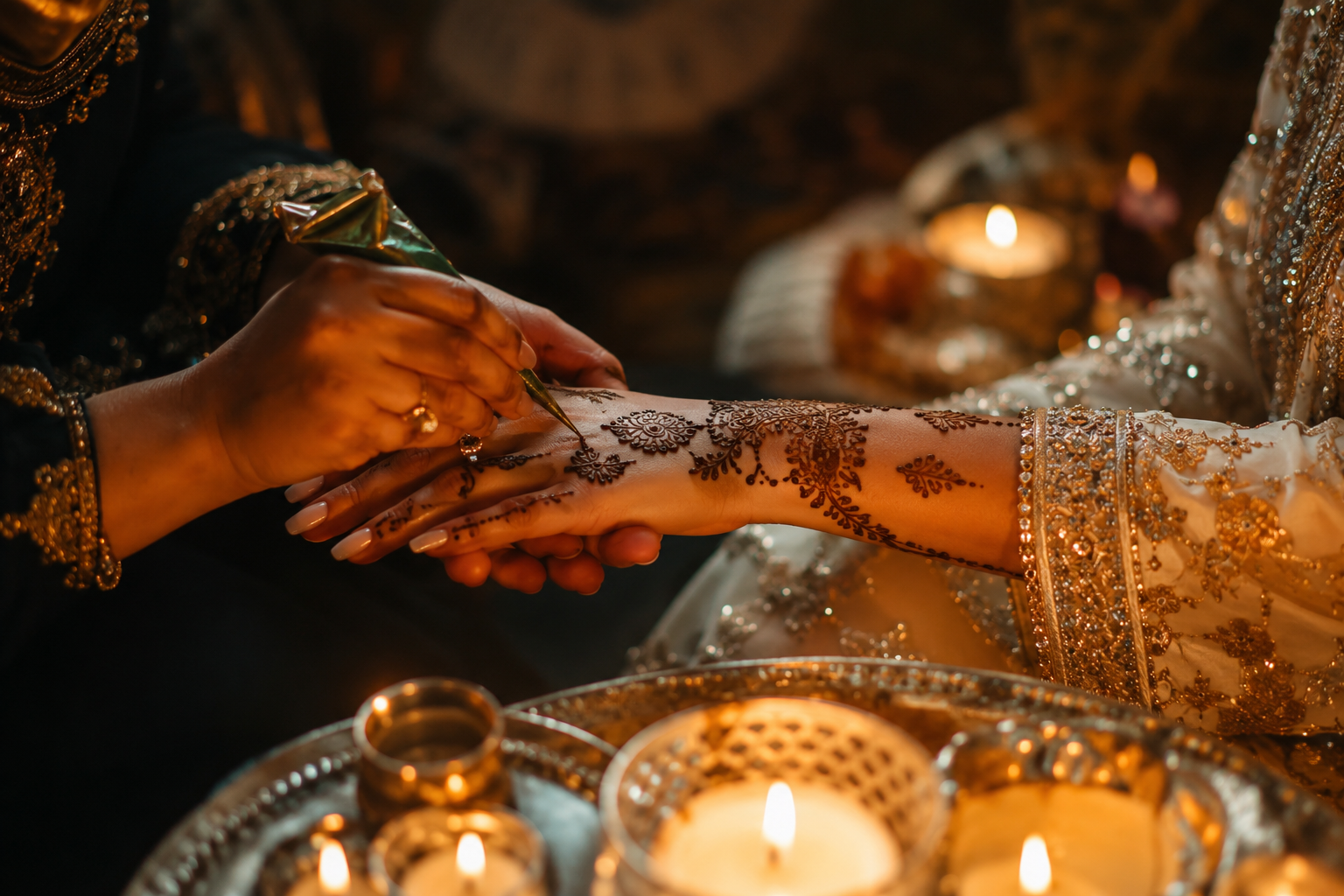
The Emirati Henna Night — The Complete Map
Women only — mother, sisters, aunts, close friends. No men. The separation is not restriction — it is protection of the celebration's intimacy.
The preparation: The house is fragranced with bakhoor before guests arrive. Plates of dates and Emirati sweets are prepared. Decorated chairs for the bride and her mother in the place of honour.
The henna session: The hennaist begins with the right hand. Focuses on palm, fingers and forearm. Patterns range between traditional geometric and contemporary ornamental. The session lasts two to four hours.
Gulf Henna Patterns — UAE, Kuwait, Qatar
Emirati Henna — Fine geometric lines, symmetrical patterns, focus on small details. The Bedouin influence is clear. Empty spaces are part of the design.
Kuwaiti Henna — Tendency toward more coverage with dense floral ornamentation.
Qatari Henna — Classic patterns with strong Islamic geometric presence. Studied simplicity.
Omani Henna — The most densely covered Gulf henna. Complete foot coverage. Among the most beautiful traditional patterns in the Arabian Peninsula.
Secrets of Deep Henna Colour
Before henna: Gentle kessa two days before, deep oil moisturising the night before, no cream or oil on the application day.
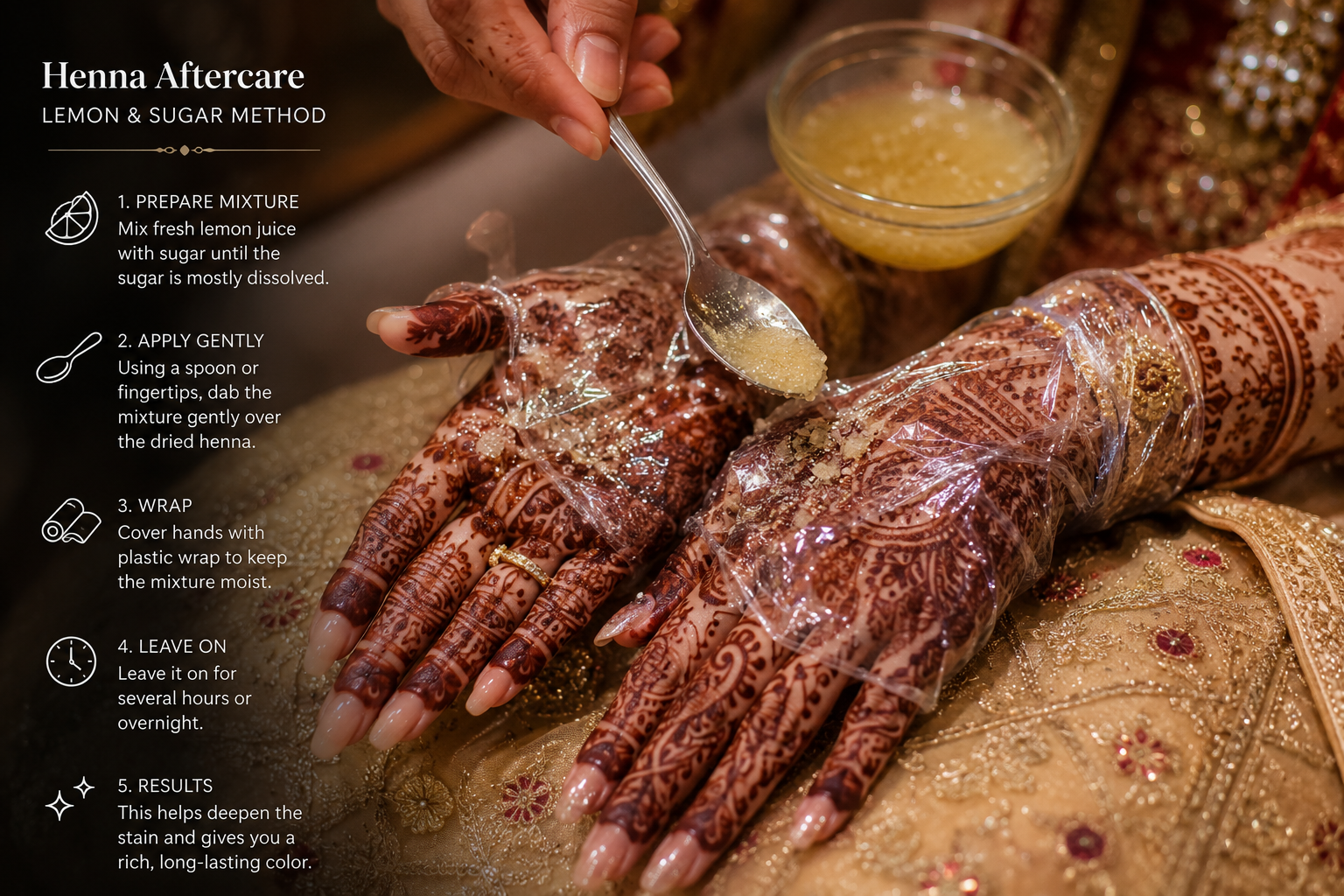
During henna: Lemon-sugar mixture over dried henna, warmth (plastic wrap + warm gloves), wait 8-12 hours minimum.
After henna: Remove with oil not water, no water for 12 hours after removal, smoke hand briefly over oud — an ancient Gulf tradition that deepens and fixes colour, full colour appears 48 hours after removal.
Natural vs Chemical Henna — A Real Danger
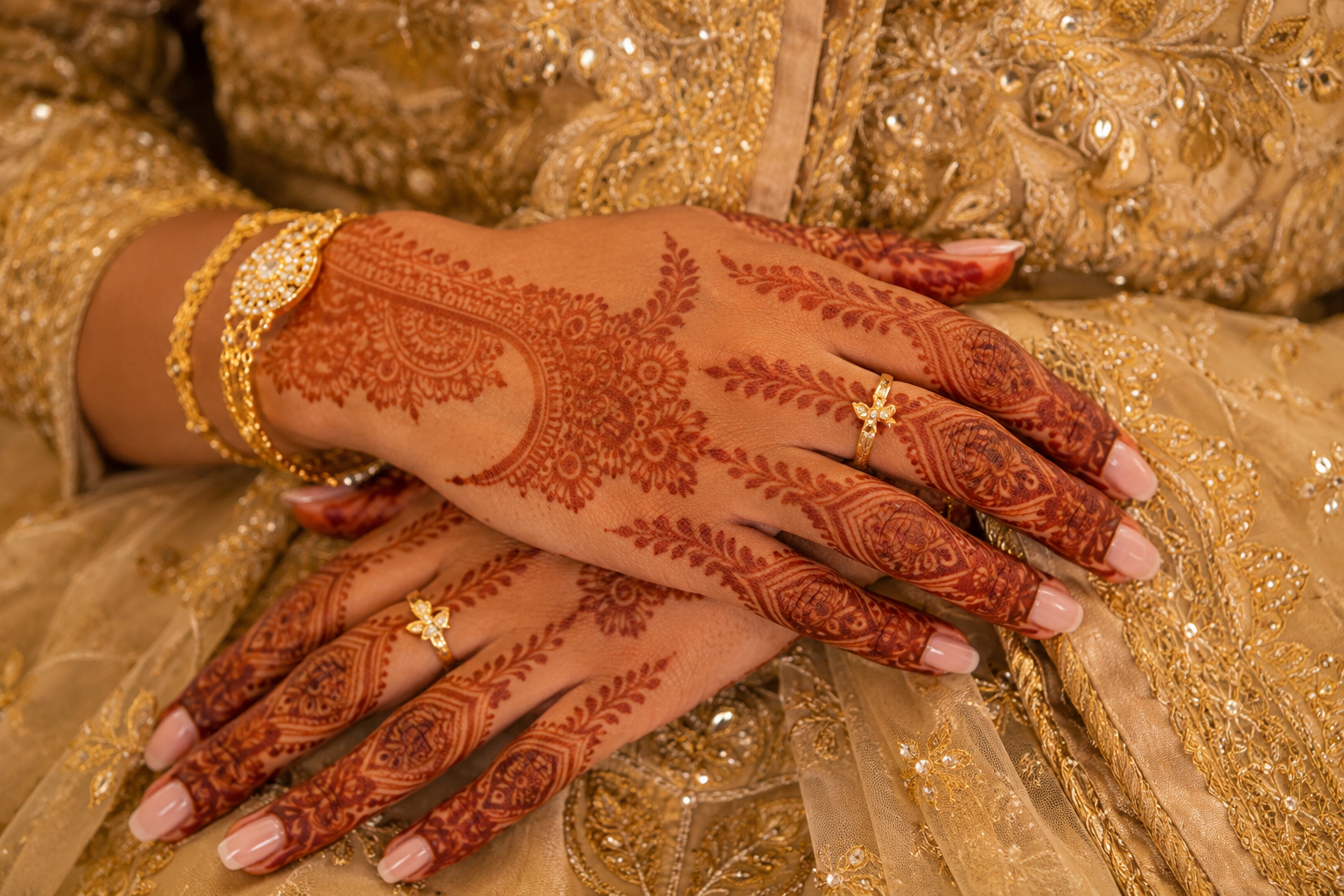
100% natural henna — Green when mixed, orange-light on fresh skin, red-orange to brown after 48 hours. No chemical smell. Completely safe.
Black henna (PPD) — Contains Para-Phenylenediamine. Immediately black. Real danger: can cause chemical burns, severe allergies and permanent scarring. Always test on a small skin area first.
Frequently asked questions
Henna in Emirati weddings carries multiple dimensions: visible beauty, blessing and good fortune, the transition from singlehood, and the bond between the bride and the women of her family who attended the henna night. It is a social, spiritual and aesthetic ritual.
Natural henna with good preparation lasts 10 to 21 days. On palms (thicker skin): 15-21 days. On forearms and feet: 10-14 days. Colour fades gradually.
100% natural henna is considered safe in advanced pregnancy according to prevailing medical opinion. Completely avoid black henna (PPD) at all stages of pregnancy. Consult your doctor to confirm.
Standard hennaist: AED 100-300. Specialist hennaist: AED 300-800. Full wedding (hands, feet, complex patterns): AED 500-2,000 and above.
Absolutely. Henna is an artistic and aesthetic tradition that transcends religious identity. Practised by Hindus, Muslims, Jews and others in different regions worldwide. In Dubai women of any background are welcome at henna night.
Henna night: usually 1-3 nights before the wedding. Palms (darkest): two days before. Feet: three days before. Colour will be at its peak on the wedding day.
Natural henna uses the henna plant and produces orange-brown tones. Black temporary tattoo uses synthetic black ink — usually containing dangerous PPD. The essential difference: natural henna is orange-brown, black tattoo ink is immediately black.
Henna courses in Dubai available in Karama and through the Department of Culture and Tourism. YouTube contains excellent Arabic tutorials. Best method: assisting a specialist hennaist for a period.
Yes — henna in the UAE for Eid, Mawlid al-Nabi, birth and naming celebrations, and sometimes as weekly decoration for some women. It is not exclusive to weddings — it is part of everyday beauty culture.