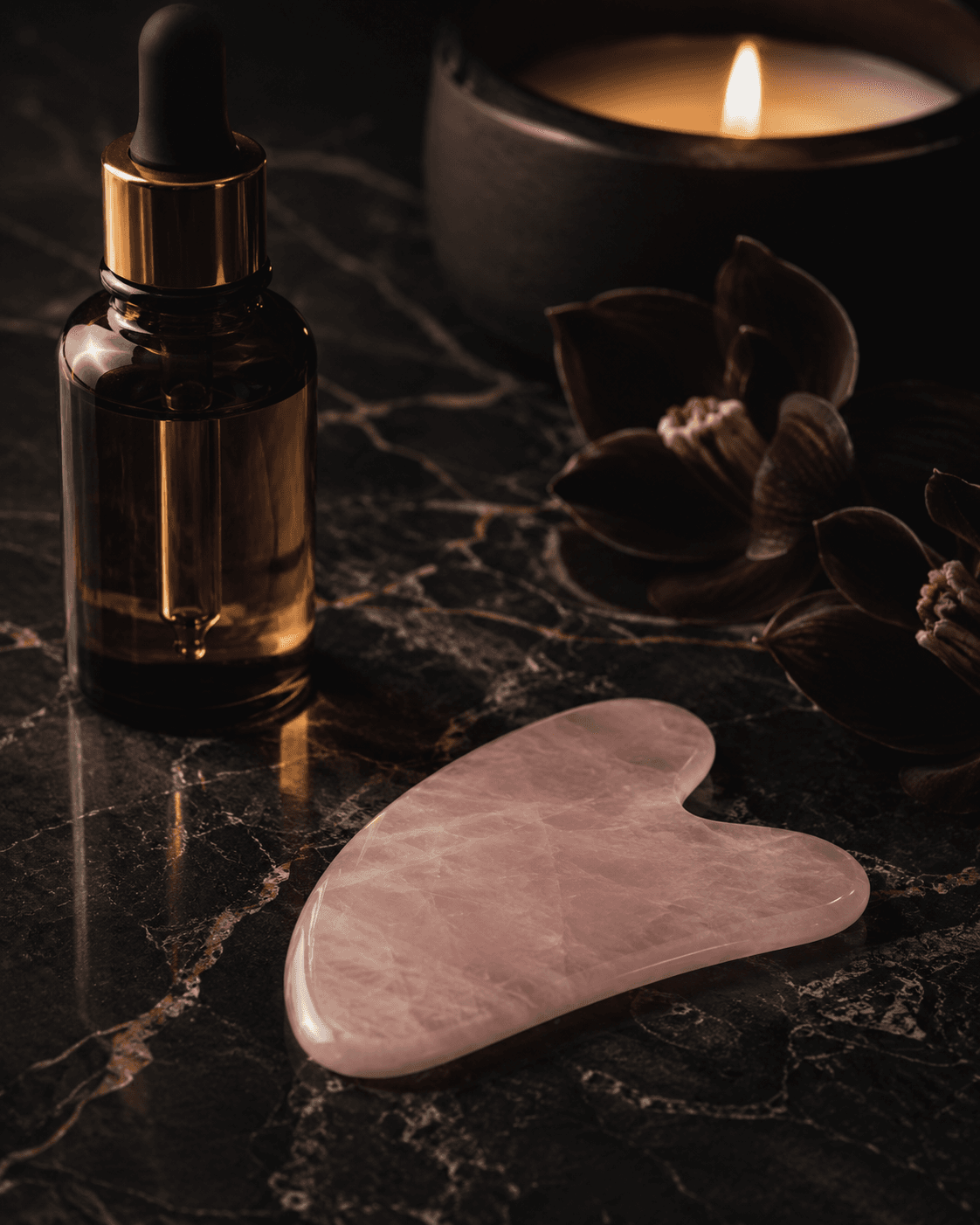
Gua sha — stones, technique and oil : the complete expert guide
Gua sha has become one of the most searched beauty techniques in the world. Most tutorials skip the details that actually make the difference. This is the complete guide.
What gua sha actually is
Gua sha (刮痧) is a Traditional Chinese Medicine technique over 2,000 years old. The facial version is an entirely different practice from the body version: gentle gliding movements, no redness, no discomfort. It drains lymph, sculpts contours and relaxes facial muscles.
Choosing your stone
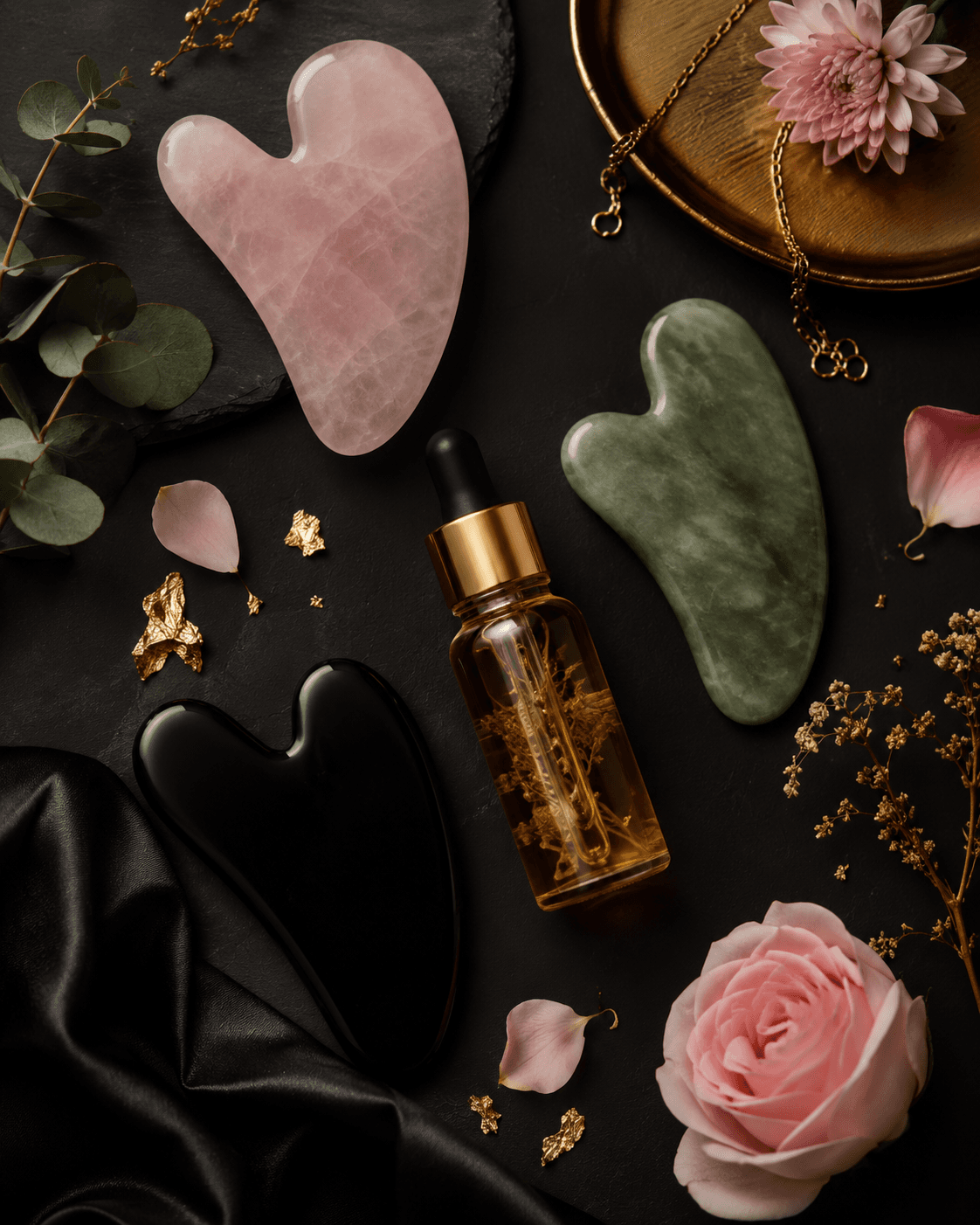
Jade, rose quartz, obsidian and bian stone — each stone has its own properties
| Stone | Properties | Skin type | Price |
|---|---|---|---|
| Jade nephrite | Naturally cool, smooth, calming energy | All skin types, sensitive skin | €15-40 |
| Rose Quartz | Gentle energy, slightly porous | Sensitive, redness-prone skin | €10-30 |
| Black obsidian | Precise edge, heats up quickly | Tense muscles, clenched jaw | €20-50 |
| Bian stone | Rare meteorite-origin mineral, 40+ trace elements, natural infrared | Mature skin, dull complexion, poor circulation | €30-70 |
The truth: a rose quartz used daily outperforms a jade used once a week. Consistency beats the stone.
The oil — the most critical element
Without oil, you drag the skin. Prickly pear seed oil is ideal: comedogenic index 0, 60-second absorption, no residue on the stone.
The technique — step by step
Golden rule: gentle pressure, always moving outward and upward. Stone angle: 15 degrees against the skin.
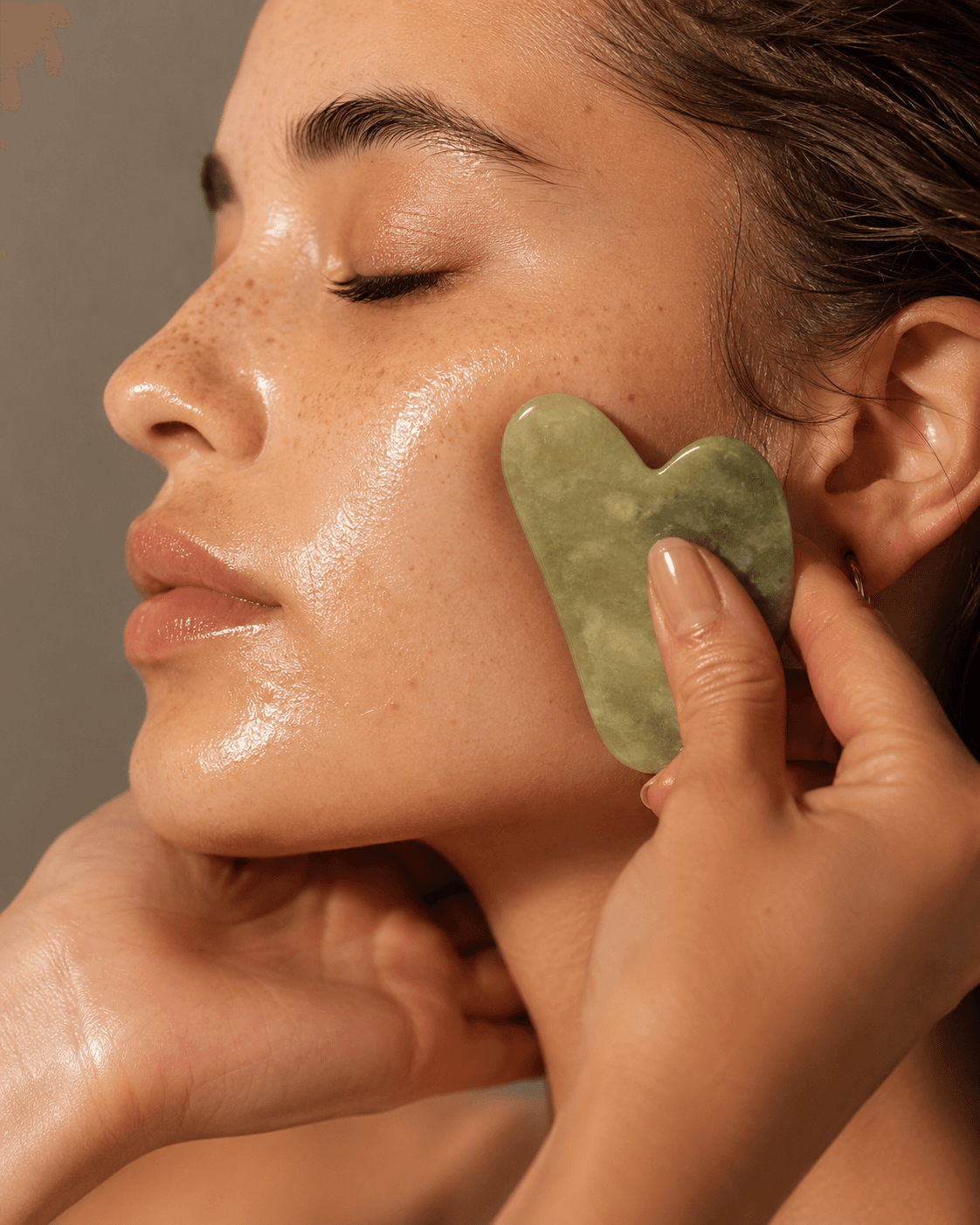
The cheekbone stroke: from the nostril toward the temple, always moving upward
- Prepare — 4-5 drops of oil on clean slightly damp skin
- Neck first — downward strokes from jaw to collarbone, 3 passes each side
- Jawline — from chin toward ears, 3-5 passes
- Cheekbones — from nostril to temple, slightly upward, 5 passes
- Under-eye — rounded tip only, barely touching
- Forehead — centre to temples, then brow upward to hairline
Frequently asked questions
A massage technique derived from Traditional Chinese Medicine, adapted for the face with gentle movements. It stimulates microcirculation, drains the lymphatic network and releases facial muscle tension. The draining effect is visible from the first session.
Rose quartz or jade nephrite. Both are versatile, accessible and suited to all skin types. The difference between stones is real but far less important than technique and consistency.
No. You need a lightweight fast-absorbing oil. Prickly pear seed oil is ideal: comedogenic index 0, 60-second absorption. Avoid coconut oil — too thick, high comedogenic index.
3 to 5 times per week in the evening after cleansing. Cumulative results appear from 14 days. Gua sha is not replaceable — consistency creates the results.
No — but it can significantly delay visible signs of ageing. The visible lifting effect comes from microcirculation stimulation and lymphatic drainage, not permanent structural modification.
Yes: irritated or sunburned skin, active rosacea, wounds or severe inflammatory acne, recent dermatological treatments (peeling, laser). When in doubt, consult a dermatologist.
The neck opens the lymphatic drainage pathways for the entire face. If you start on the face without opening the neck, lymphatic fluid has nowhere to go. This is the most common error in beginner tutorials.
Clean after each use with soapy water. Dry gently. Weekly: floral water or diluted alcohol. Store on soft fabric. If cracked: replace immediately.
Yes — particularly well. Microcirculation stimulation improves cellular oxygenation and can regulate sebum production long-term. Use a lightweight dry oil like prickly pear.
The roller is a massage tool, not gua sha. It does not work with an angled glide — it rolls. The effect is more superficial and less targeted. Gua sha with the correct technique produces significantly deeper results on drainage and sculpting.
Discover Eclorya's elixirs
Cold-pressed vegetable oils, ECOCERT certified, 100% natural.
Discover Eclorya →