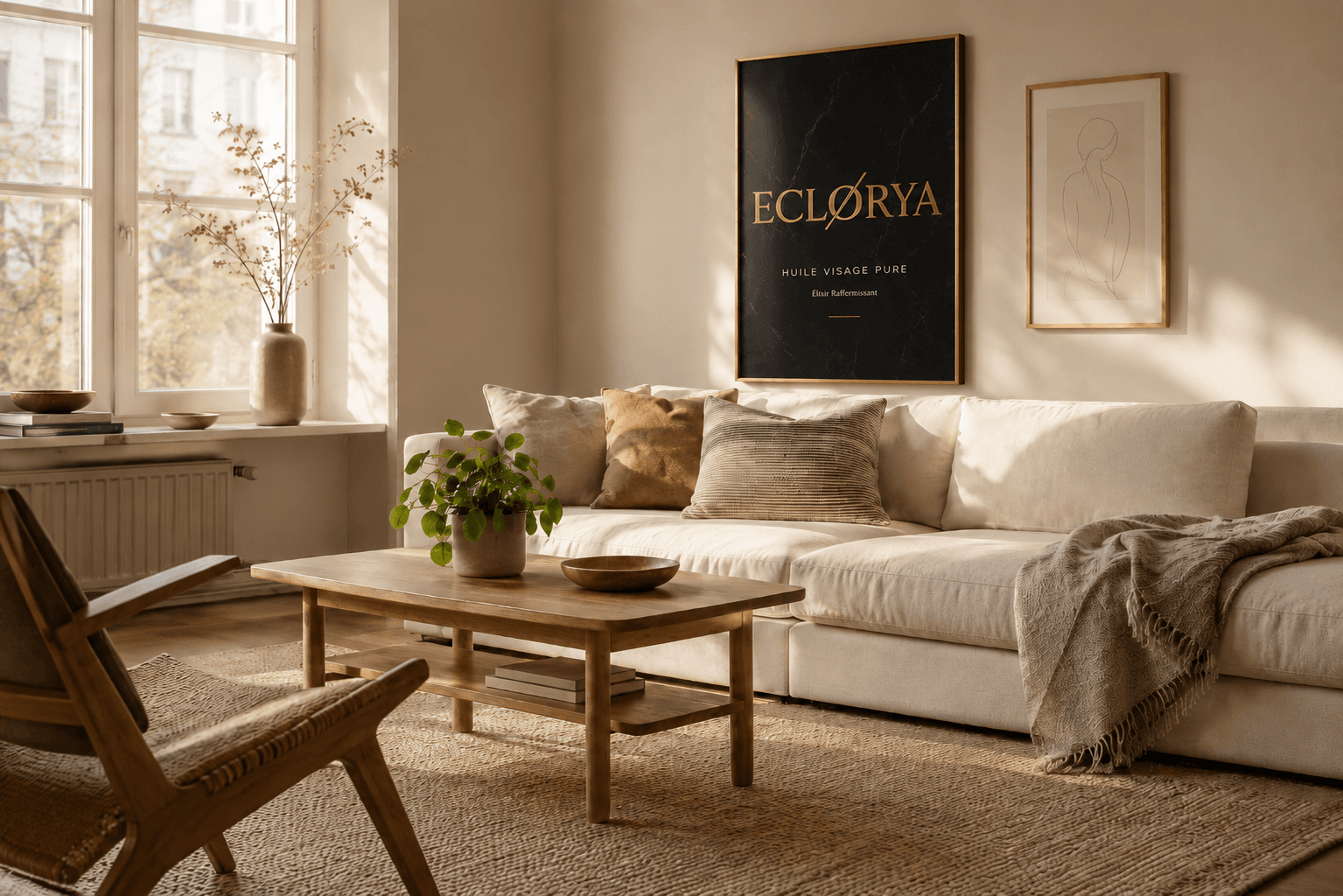
Minimalist decoration — simple, chic and calming
Why minimalism makes you happier — the science
Environmental psychology studies show visual clutter increases cortisol and reduces concentration capacity. A clear space allows the nervous system to relax more easily.
The 5 principles of minimalist decoration
- Less but better — One beautiful vase has more impact than a shelf full of accumulated decorative objects.
- Neutral palette with one accent — Base: off-white, beige, warm grey, natural linen. Accent: one colour you truly love. Two colours maximum per room.
- The surfaces rule — Horizontal surfaces should not be permanent deposit zones.
- Natural materials — Wood, linen, cotton, stone, ceramics create warmth preventing minimalism from feeling cold.
- Light as decoration — Light curtains that let natural light through are worth more than heavy ones that block it.
Frequently asked questions
Yes — with adaptation. Choose quality toys in smaller quantities, provide accessible storage for children, accept that some areas are lived-in rather than perfect.
One space first — preferably the bedroom. Empty everything, return only what is necessary or truly loved. Observe how you feel and expand progressively.
No. Minimalism bans meaningless accumulation, not meaningful objects. A loved collection displayed intentionally is different from objects accumulated by inertia.
Natural materials (wood, linen, wool, raffia), plants, candles, warm supplementary lighting. A cold minimalist interior is a poorly executed one.
Minimalism can be inexpensive — it starts with removing rather than buying. Investment should go towards a few quality pieces rather than many decorative objects.
Absolutely — plants bring warmth and oxygen without visual clutter if well chosen and maintained. One well-displayed plant has more impact than ten crowded together.
The "one object placed = one object moved" rule. Decorative trays delimit intentional object zones.
Limit colours to two or three maximum, work volumes in those chosen colours rather than accumulating small coloured objects.
A lifestyle. It does not depend on following a trend but on cultivating a conscious relationship with one's environment.
By integrating intentionally chosen personal objects, living materials (plants, candles), elements with history.