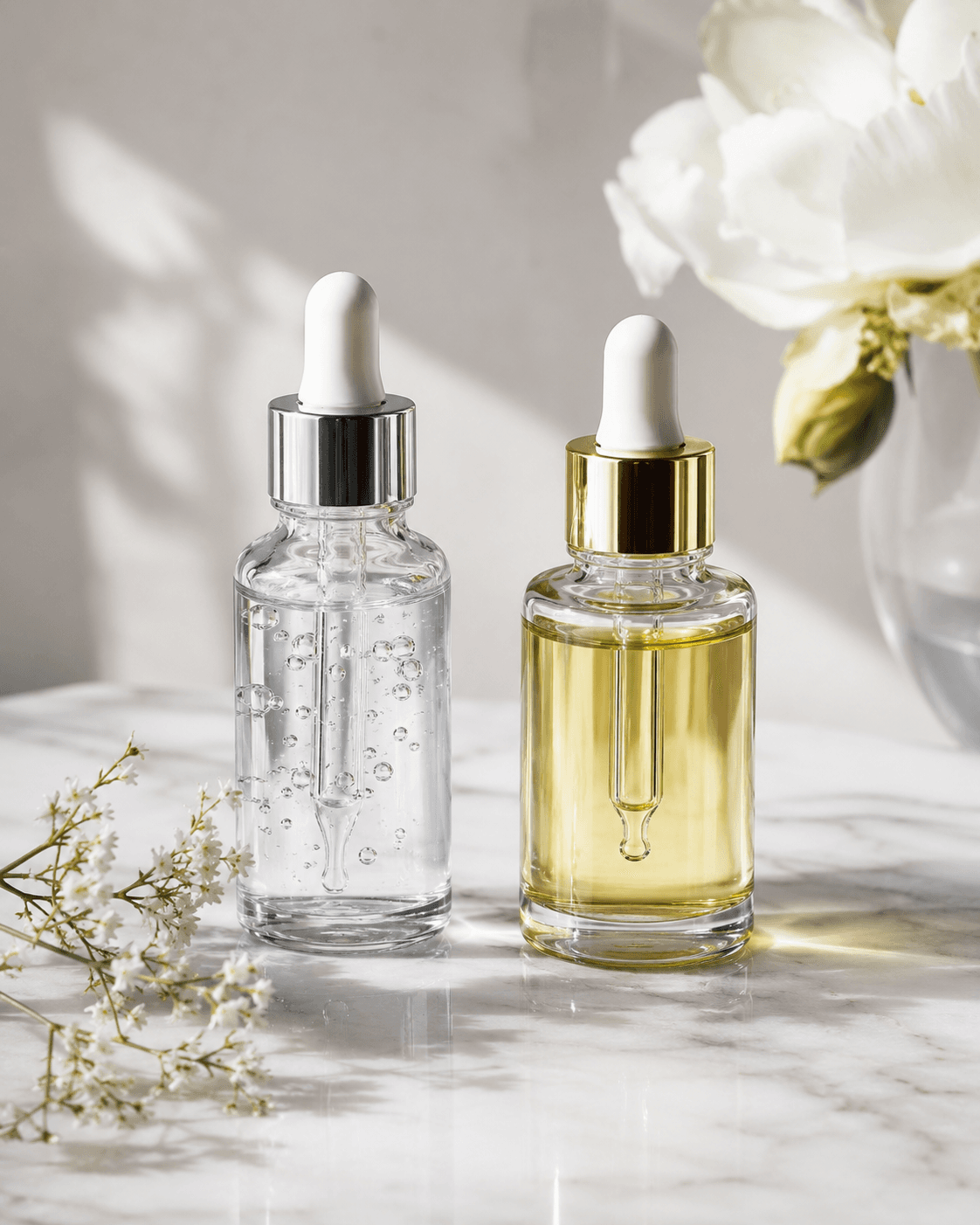
Hyaluronic acid vs botanical oil — the real scientific comparison
Millions of women ask the same question every evening. Should you choose between hyaluronic acid and botanical oil? Science's answer: it is not a choice — it is an order.
Two actives, two completely different mechanisms
Hyaluronic acid and botanical oil have opposing biological mechanisms. That is precisely why combining them is so effective.
| Criterion | Hyaluronic Acid | Pure Botanical Oil |
|---|---|---|
| Chemical nature | Polysaccharide (complex sugar) | Triglycerides + essential fatty acids |
| Solubility | Hydrophilic — loves water | Lipophilic — loves fats |
| Primary action | Surface hydration | Cellular nutrition, lipid barrier rebuild |
| Penetration | Superficial layers | Deep layers — cell membrane |
| Duration | 4 to 8 hours | 12 to 24 hours |
| Dry mature skin | Good | Ideal |
| Oily skin | Ideal | Very good with light oil |
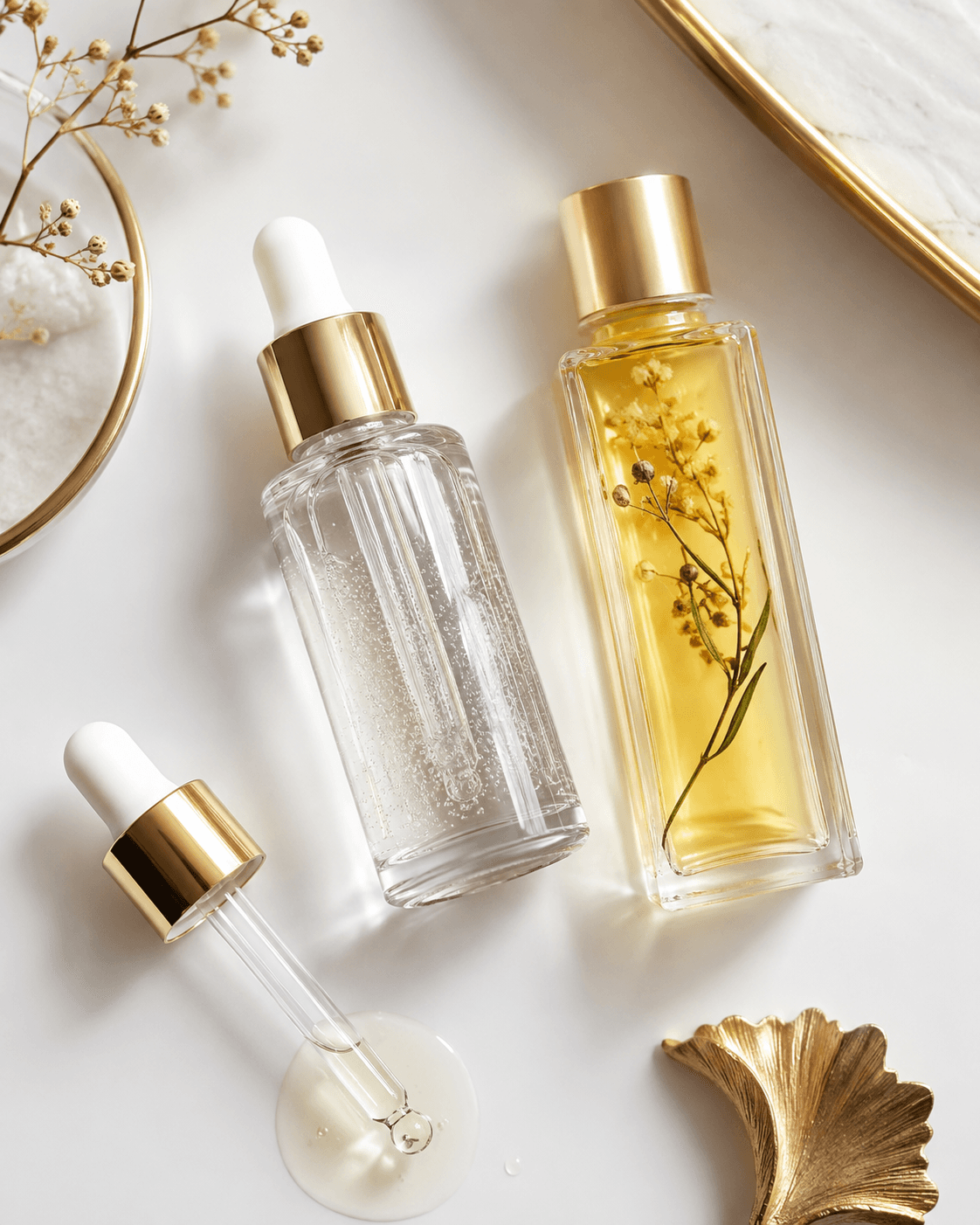
Hyaluronic acid serum and botanical oil — two complementary actives, never competitors
What hyaluronic acid actually does
HA can retain up to 1,000 times its weight in water. Its production declines with age. Warning: HA alone, without lipid occlusion, can paradoxically dry out skin in very dry environments by pulling water from deeper layers.
What botanical oil actually does
A pure botanical oil integrates directly into cell membranes. Rare sterols in certain oils — like delta-7-stigmasterol in prickly pear — additionally activate collagen-producing fibroblasts. HA does not do this.
The order that changes everything
Moisture without a lipid film evaporates. A lipid film without moisture nourishes without hydrating. Together they do what neither can alone.
- HA serum on clean damp skin — HA binds to residual water
- Wait 30 seconds
- Botanical oil immediately after — seals HA and water onto the skin
- SPF 30+ every morning — non-negotiable
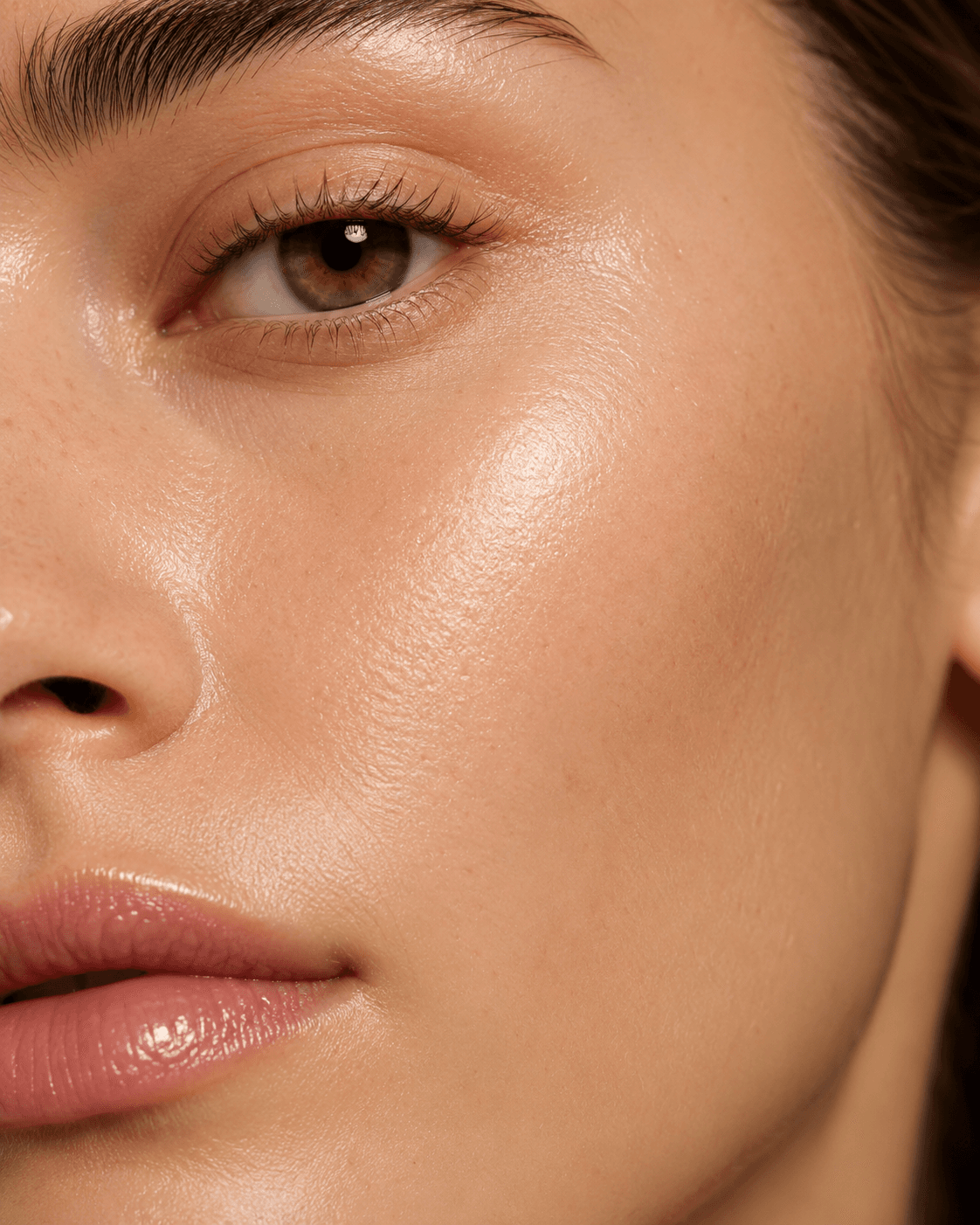
The visible result of a routine that respects the HA-then-oil order
Frequently asked questions
No. They do opposite, complementary things. HA brings the water, oil keeps it. Using them separately means working with half their potential.
Always HA first on damp skin, then oil on top. HA being hydrophilic, it binds to water. Oil being lipophilic, it seals this hydration. Reversing the order is a common mistake reducing both actives' effectiveness.
Yes, in certain conditions. In very dry air, HA without a lipid film can pull water from deep layers to the surface. Solution: always apply HA on slightly damp skin, then seal with oil.
Prickly pear seed oil is ideal: comedogenic index 0, 60-second absorption, ~1,000 mg/kg vitamin E. It seals HA without greasy residue, suitable for both oily and dry skin.
Not directly. HA hydrates and temporarily plumps. It is certain plant sterols in oils — like delta-7-stigmasterol in prickly pear — that activate collagen-producing fibroblasts. Both actives have distinct roles.
For dry to very dry skin: yes. A good botanical oil simultaneously hydrates and nourishes. For oily skin: no — an HA serum provides oil-free hydration that oil alone cannot offer.
Yes — it is one of the rare universal actives. Oily skin tolerates it perfectly as it is non-comedogenic and adds no fat. Dry skin benefits but should pair it with an oil.
High molecular weight HA stays on the surface — immediate visible plumping but temporary. Low molecular weight HA penetrates the dermis and stimulates natural HA production. The best serums combine both.
Depends on the oil. Comedogenic index ranges from 0 to 5. Prickly pear, argan and squalane have index 0-1 — suitable for oily and combination skin. Coconut oil has a high index — not recommended for the face.
Yes if the oil is lightweight and fully absorbed before application. Prickly pear (60-second absorption) and argan are suitable. Wait for complete absorption before applying makeup base.
Discover Eclorya's elixirs
Cold-pressed vegetable oils, ECOCERT certified, 100% natural.
Discover Eclorya →